- Loading…

This hands-on STEM workshop is inspired by the children’s book Lúcia Já Vou Indo, written and illustrated by Maria Heloísa Penteado. In the story, Lucia is a snail who is always late simply because she moves very slowly. This narrative becomes the starting point for an engaging engineering challenge.
Students are invited to help Lucia return home in time for a surprise party by designing and building a transport system that can safely move her from one point to another. Grounded in storytelling, the lesson connects literacy with science, technology, engineering, and mathematics, transforming a familiar problem from the story into a real-world design challenge.
This activity was developed in partnership with educator Gustavo Saulle and Estúdios Xarabemba, drawing on their experience with creative experimentation, playful engineering, and open-ended learning environments. The collaboration strengthens the lesson’s emphasis on imagination, hands-on exploration, and learning through making.
Working collaboratively in small teams, learners plan, prototype, test, and refine their solutions using a variety of materials and, when available, digital fabrication tools and simple electronics. Throughout the process, students explore key STEM concepts such as motion, balance, forces, energy transfer, and structural stability, making design decisions based on observation, testing, and iteration.
The activity follows the “low floor, high ceiling, wide walls” approach, ensuring that all students can engage meaningfully while allowing for diverse, creative, and increasingly sophisticated solutions. By combining literature with the engineering design process, the lesson promotes student agency, creativity, collaboration, and reflective thinking, culminating in shared demonstrations and discussions of learning outcomes.


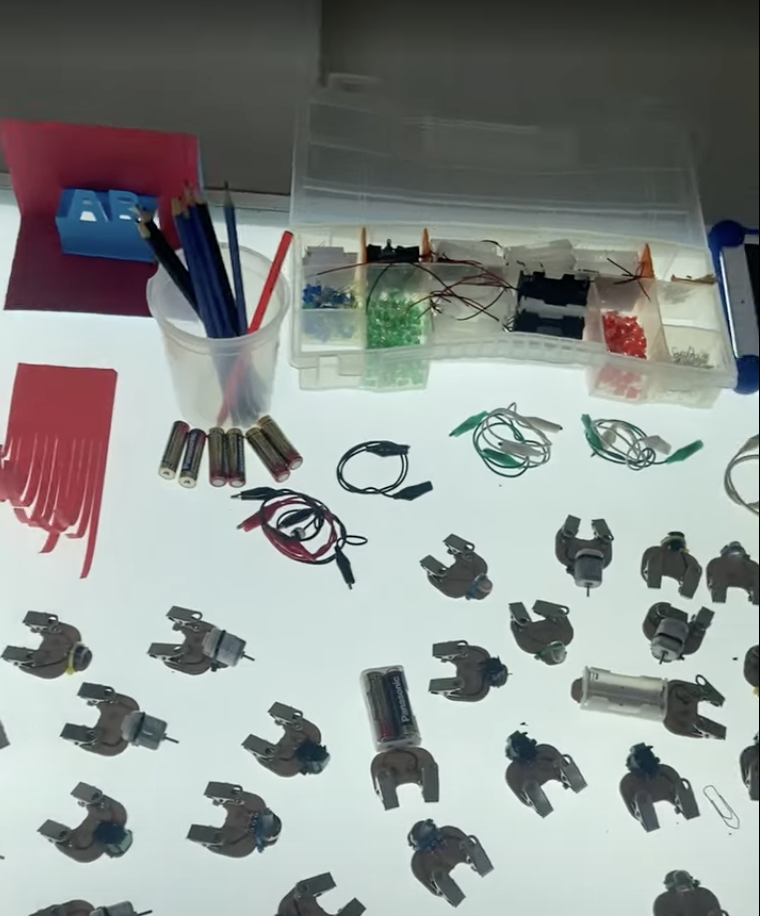
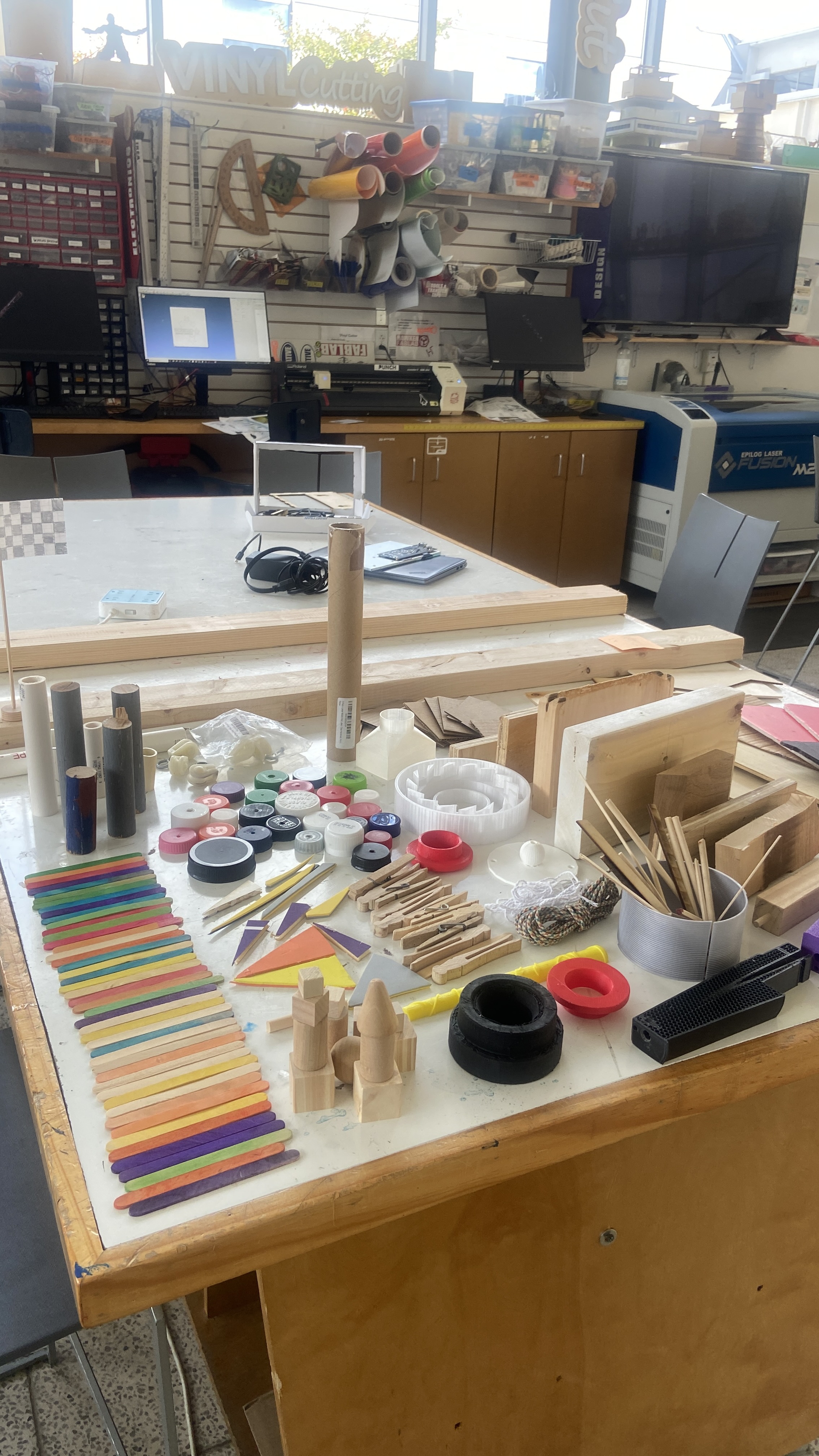
This activity is intentionally flexible and adaptable. Materials should be offered in abundance and organized in an inviting, visually accessible way to encourage exploration, choice, and creativity.
This activity is designed to be accessible to learners of all ages. Because of its open-ended nature and its alignment with the low floor, high ceiling, wide walls approach, learning objectives may vary according to participants’ age, prior knowledge, and level of challenge chosen. Regardless of these variations, the activity supports the development of core technical and socio-emotional competencies.
This lesson highlights how storytelling can be a powerful entry point for STEM learning, helping learners connect emotionally with a challenge before engaging in technical problem-solving. By starting from Lucia’s story, participants learn that meaningful engineering begins with understanding a real need or context.
The activity demonstrates that open-ended challenges, grounded in the low floor, high ceiling, wide walls approach, naturally support diverse learners, ages, and skill levels. It reinforces the idea that there is no single “correct” solution, and that learning emerges through exploration, testing, iteration, and reflection.
When working with middle and high school students, this lesson reveals the importance of carefully designing the challenge’s constraints, rules, and success criteria. Clear boundaries help prevent students from settling for overly simple solutions and instead encourage them to push their thinking, explore complexity, and reach their full creative and technical potential. In these contexts, the lesson also shows that time is a critical factor: a single class period is often not enough for deeper exploration, iteration, and refinement, and extended project time leads to richer learning outcomes.
In contrast, with younger learners or adult participants, the activity can successfully begin and conclude within a single 90-minute to 2-hour session, especially when materials are abundant and intentionally organized in an inviting and visually appealing way. In these cases, immediate access to diverse materials supports engagement, autonomy, and sustained focus throughout the experience.
Overall, the lesson reinforces the value of failure and unexpected outcomes as essential parts of the design process, strengthening resilience, perseverance, and adaptability. It also highlights the importance of collaboration, communication, and shared responsibility in team-based work. For educators, the experience deepens the understanding of how STEM learning thrives in environments that balance freedom and structure, time and intention, imagination and engineering.
Meet Lucia, a snail who moves slowly and, because of that, is almost always late. In the story, she leaves home to attend a birthday party and, as expected, arrives after it has already started. On her way back, she risks missing her own surprise birthday party, carefully prepared by her friends at her house. This moment sets up the challenge for students: how can we help Lucia get home on time this time? The story invites empathy and curiosity, naturally leading into the design task.
Read the story Lúcia Já Vou Indo or briefly retell its main idea, focusing on Lucia’s constant struggle with being late and the moment when she risks missing her own surprise birthday party. Invite students to talk about why this happens and how they feel about Lucia’s situation.
Ask guiding questions such as: Why is Lucia always late? What makes moving faster or slower? How could someone help her get home on time?
Introduce the design challenge: students will work together to create a solution that helps Lucia travel from one place to another more efficiently.
Avoid suggesting solutions at this stage. The goal is to build understanding, empathy, and curiosity, preparing students to engage meaningfully with the engineering task.
In this step, students clearly define the design challenge and begin planning their solution. They discuss goals, constraints, and possible ideas before building. This moment shifts the activity from story to engineering, helping learners organize their thinking and work intentionally. Planning supports deeper engagement and more thoughtful prototypes.
Throughout this step, the educator’s role is to support thinking through open-ended questions rather than offering solutions. Questions like “How will Lucia move?”, “What might not work as expected?”, and “What could you change if needed?” help students deepen their reasoning and prepare for the next phase of building and testing.
In this step, students turn their ideas into physical prototypes. They build their solution, test how it works, and observe what happens. Through testing and adjustment, learners discover what works, what needs improvement, and how small changes affect performance. This process reinforces learning through iteration and hands-on experimentation.
Invite students to begin building their solution using the materials provided. Encourage them to start simple and focus on making Lucia move from the starting point to the destination in a safe and controlled way. Remind students that their first version does not need to be perfect, it is a starting point for learning.
As teams work, allow time for testing. Students should place Lucia in their system, observe what happens, and talk about what works and what does not. Encourage them to notice movement, speed, balance, and stability, and to make small adjustments based on their observations.
Support an iterative process by reinforcing that redesign is expected and valuable. Students may change materials, adjust angles, reinforce structures, or rethink how Lucia moves through the system. Emphasize that each test provides new information that can improve the design.
Throughout this step, circulate among the groups and ask open-ended questions such as “What happened when you tested it?”, “Why do you think that occurred?”, and “What could you change to improve it?” Avoid fixing problems for students; instead, guide reflection and decision-making.
If time allows, invite teams to test their solutions multiple times to check consistency. This helps students understand reliability and strengthens their confidence in their design before sharing it with others.
Having trouble? Let us know by completing the form below. We'll do our best to get your issues resolved quickly.
"*" indicates required fields