Across the Washington, D.C. region, students and community members are gaining new opportunities to explore STEM through hands‑on making thanks to the arrival of Fab‑in‑a‑Box digital fabrication labs supported by Aramco.
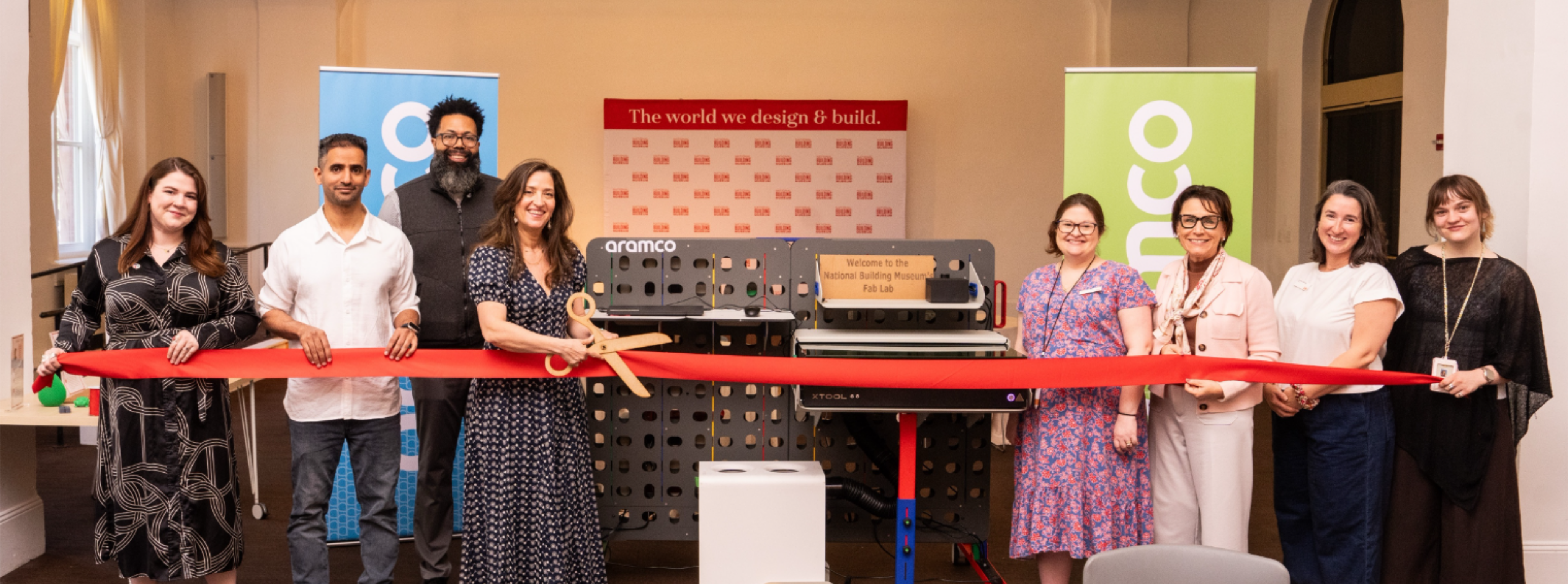
These portable, professional‑grade units are now in five new locations that have joined the Fab Foundation network, bringing advanced tools directly into classrooms, libraries, and museums where learners naturally gather. Each Fab‑in‑a‑Box includes a laser cutter, 3D printer, vinyl cutter, electronics kits, materials, and a computer loaded with industry‑standard design software, giving students immediate access to the same tools used by engineers, designers, and makers around the world.
While custom curriculum is available, educators say students rarely wait for formal instruction. At McKinley Technology High School, the Principles of Engineering class quickly embraced the new equipment. Teacher Gabriel DeAnda, who has taught for 15 years, noted that “the 3D printer has been running non stop” as students use the lab to support coursework, experiment with CAD tools, and even enhance their FIRST® Robotics competition designs. Early exposure to fabrication technology helps prepare students for certification programs, college engineering pathways, and the growing number of makerspaces appearing on university campuses across the U.S.
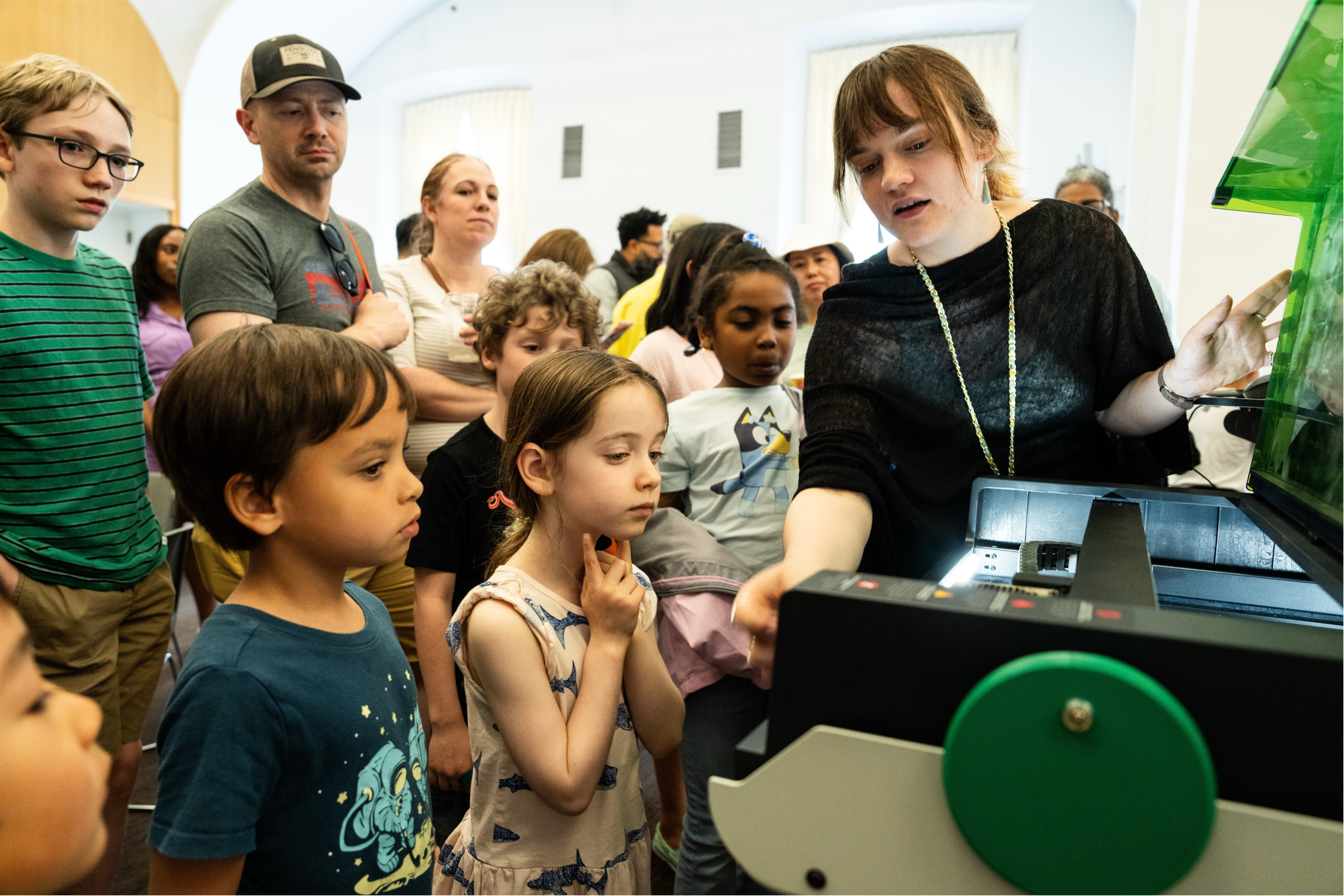
The excitement is not limited to schools. Public spaces such as the Martin Luther King Jr. Memorial Library and the National Building Museum are also seeing increased engagement as young visitors discover the Fab‑in‑a‑Box units. For many elementary and middle school students, these labs offer a first encounter with digital fabrication. MLK librarian Margaret Styers admitted she was initially nervous about managing the equipment, but quickly saw how naturally teens gravitated toward it, especially in the library’s after school Teen Space. At McKinley Tech, librarian Juan Samperio has noticed new faces appearing in the library as word spreads about the lab tucked into the back of the room. “We have our regulars, but there are kids coming in that I have never seen before,” he said, reflecting how the presence of Fab-in-a-Box can draw in students who might not otherwise engage with STEM activities.
The Fab‑in‑a‑Box model is intentionally approachable, allowing students to begin creating with minimal ramp up time while giving educators the flexibility to integrate the tools into existing lessons or launch new project based learning experiences. These labs help students strengthen problem solving skills, collaborate with peers, build familiarity with real world engineering tools, and explore potential STEM career pathways. By placing advanced technology in everyday community spaces, the initiative helps make STEM learning more equitable and engaging.
The Fab Foundation now supports nearly 3,000 labs in more than 150 countries, demonstrating the global impact of accessible fabrication tools. With support from Aramco, the expansion of Fab‑in‑a‑Box units in the U.S. is helping more students discover the power of making, creating, and innovating one project at a time.