- Loading…

Prior to this lesson, students should already have some general knowledge of basic literary devices and sensory details such as metaphor, simile, and visual imagery. Students will have the chance to refine their understanding of more advanced devices during the lessons.
Throughout the Creative Writing unit that this lesson is a part of, I emphasize the importance of play and experimentation over perfection and “literary genius.” This lesson continues to emphasize that.
Prior to the class, teachers should group the students together by the five senses: sight, sound, smell, touch, and taste.
Printouts of the poem Letter to N.Y. by Elizabeth Bishop
Letter to N.Y. Analysis Teacher Aid (AI-generated)
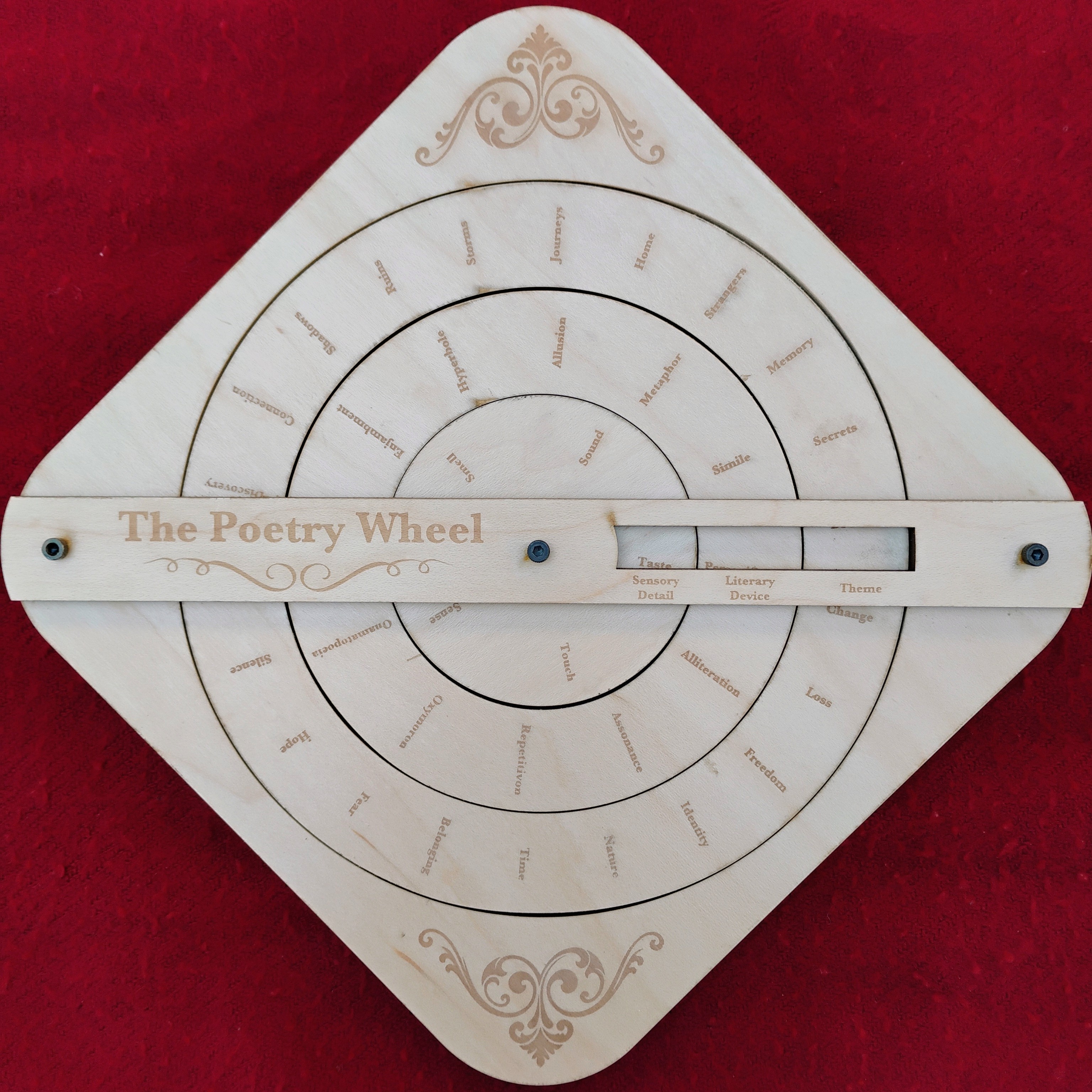
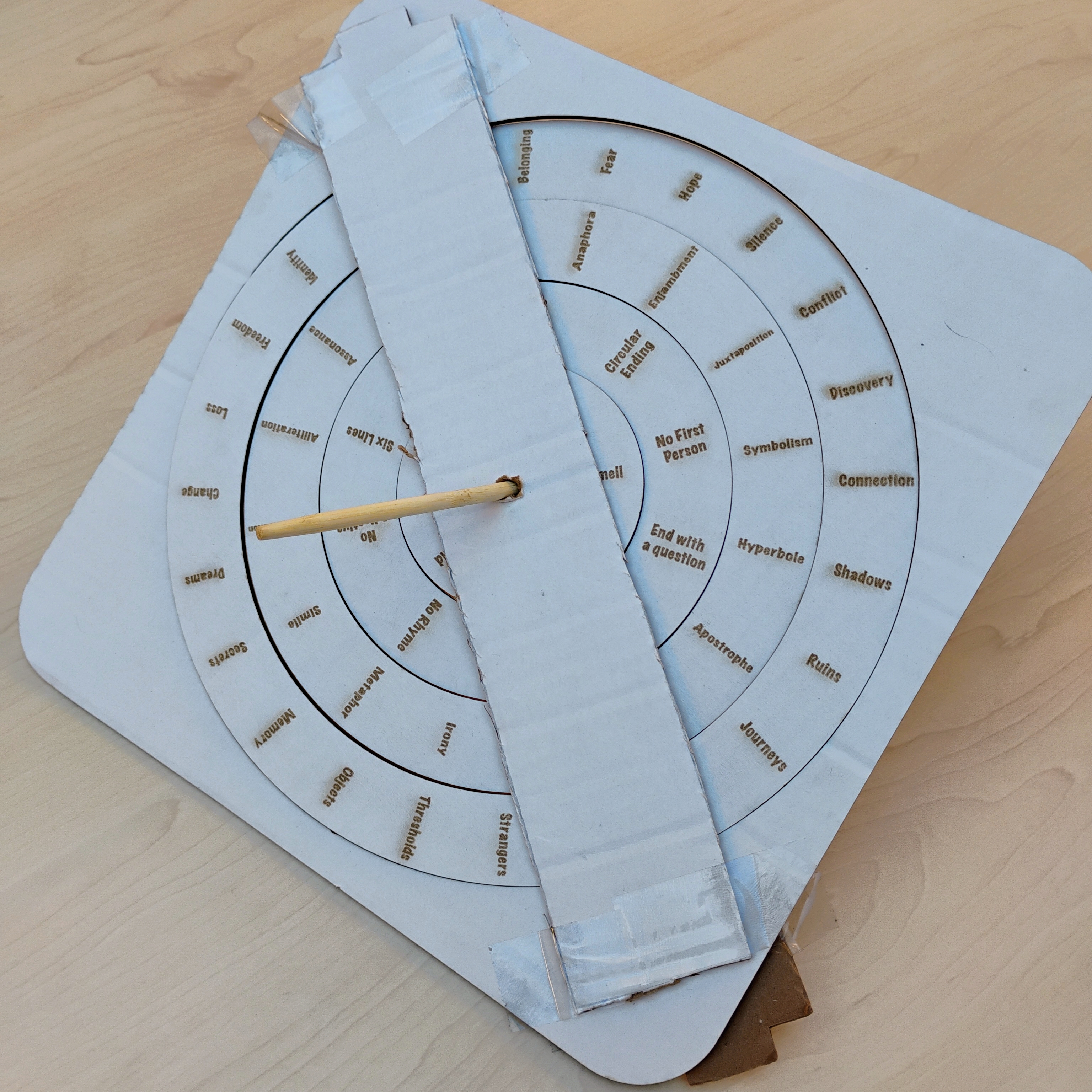
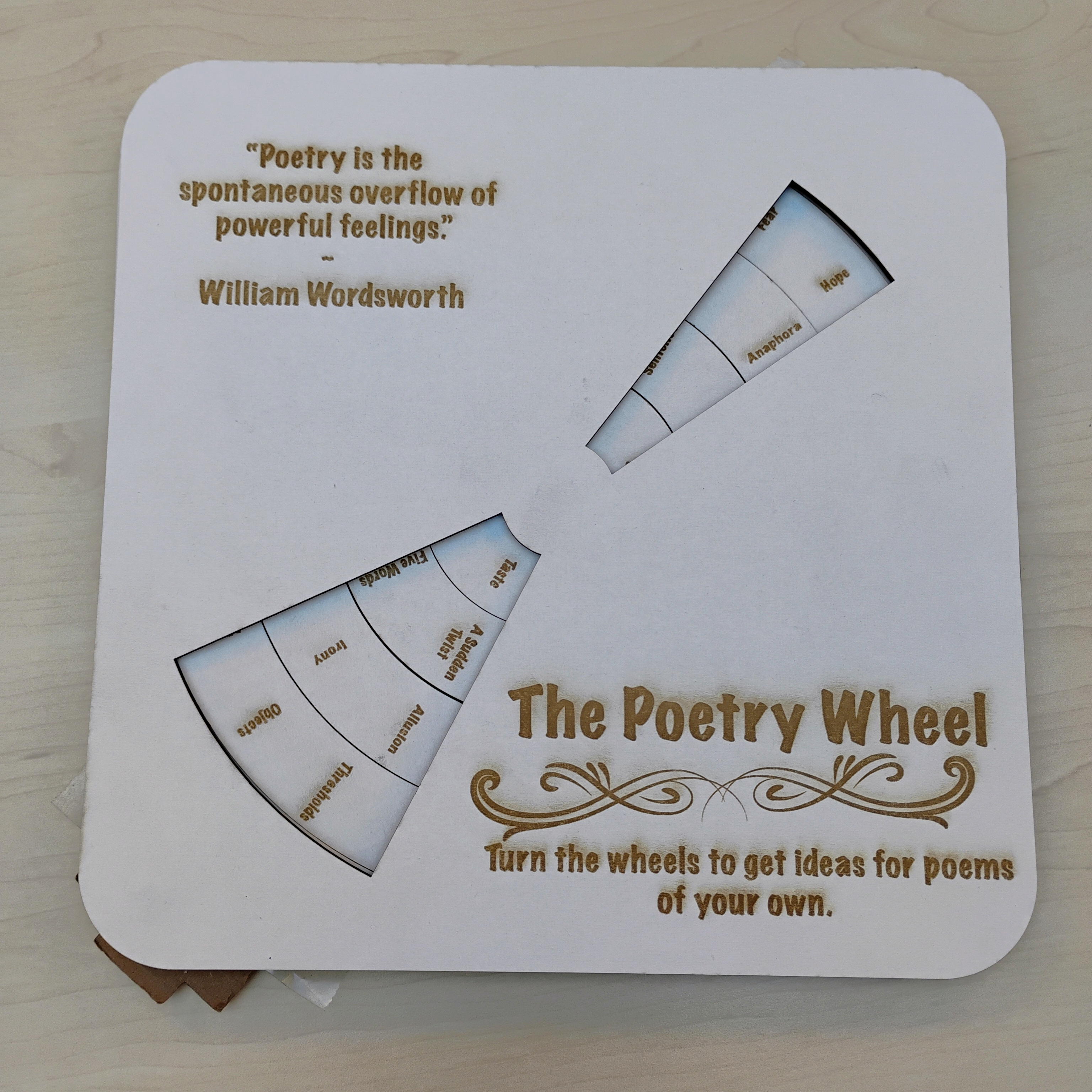
The Poetry Wheel manipulative made in the Fab Lab
Students will learn about literary devices and sensory details in poetry.
Students will identify and analyze literary devices and sensory details in a poem.
Students will create a poem of their own using literary devices and sensory details.
I could have set up three containers with little slips of paper and had students choose from each to get their Literary Device, Sensory Detail, and Theme. But I don’t think the students would have been as interested or engaged. This Poetry Wheel also gives them more of a choice in which literary devices they use.
The teaching aid added value because it made it abundantly clear that they were expected to use literary devices and sensory details. In past years, I went over these in class and was clear that I expected it in their summative assessment, but many students simply didn’t either didn’t understand that this was an expectation, or they weren’t sure how to do it. When it’s made tactile through the wheel, this will hopefully be less of a problem.
One challenge I do expect when doing the activity with my class is that my students might choose the easiest literary devices, or the ones that they are most familiar with, rather than ones that will challenge them. That is why I built it into the lesson for them to spin twice, to increase their chance of doing one that will push them further.
In terms of hard skills, I learned how to use Adobe Illustrator for the first time, and also how to use a laser cutter. I also learned about how a lasing cutting design needs to be structured. In the end, I ended up creating a second file with my final design because my first file was far too cluttered with disorganized layers and artifacts I thought I had deleted but really hadn’t. It was too cumbersome to go back and fix it, so I just redid it, which actually took less time.
I also learned that an initial design may ultimately not be practical in real life. My first full design had nearly a full cover with a small turning window that I thought would be enough to rotate the wheels. But this turned out not to work. So I had to completely redesign how I secured the wooden wheels so that they could rotate without wobbling.
Introducing literary devices and sensory details.
Students write their own literary devices using a visual prompt.
Students analyze a sample poem to find examples of literary devices and sensory details. (The teacher may wish to use the attached teacher aid for a full list of figurative language used in the poem.)
Students use the manipulative to determine which literary devices and sensory details they will use in their own formative poetry writing assignment.
Having trouble? Let us know by completing the form below. We'll do our best to get your issues resolved quickly.
"*" indicates required fields