- Loading…

Designed for MEQ Secondary V Physics; meets Progressions of Learning in Dynamics (2c, 5, 7)
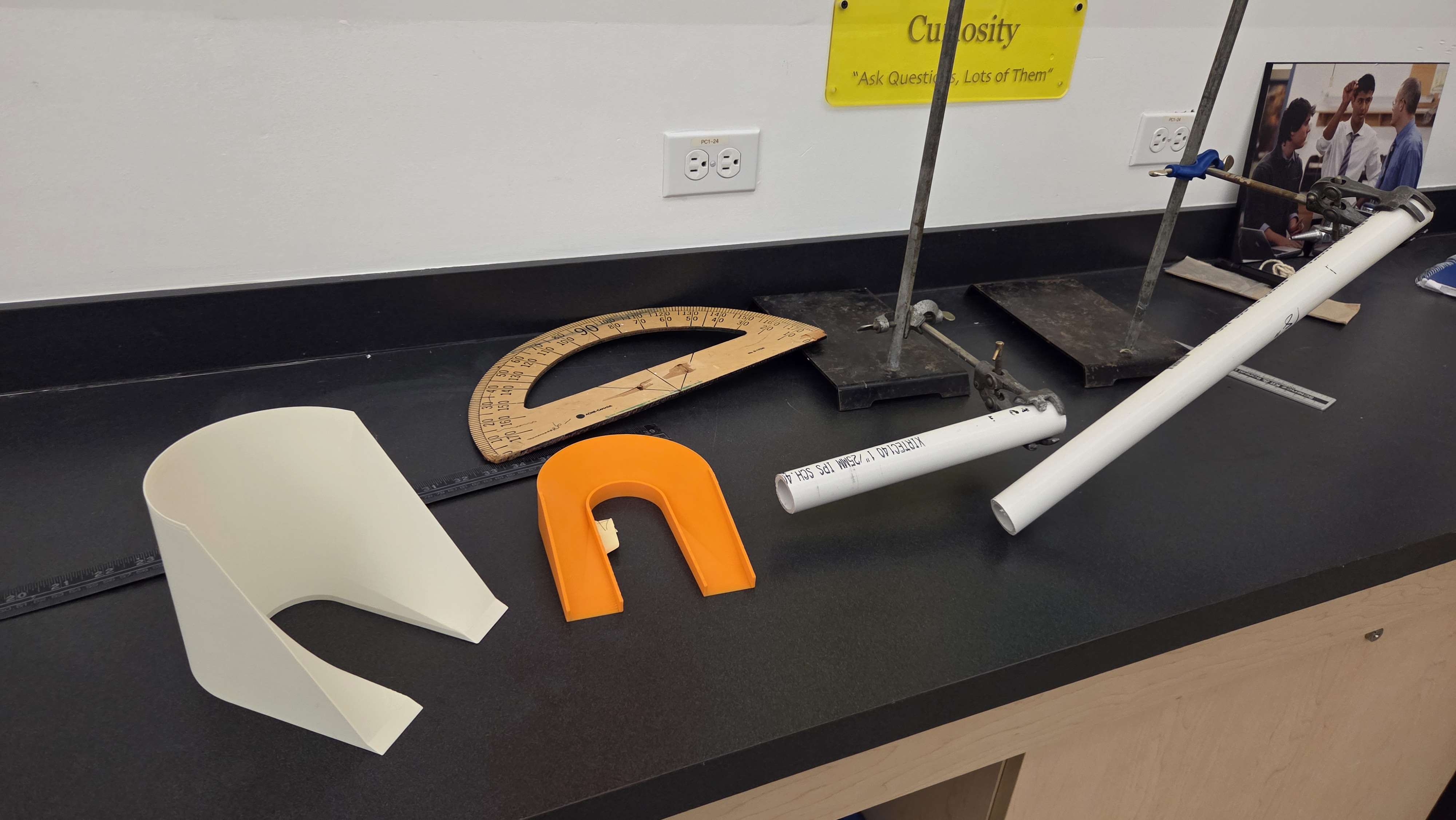
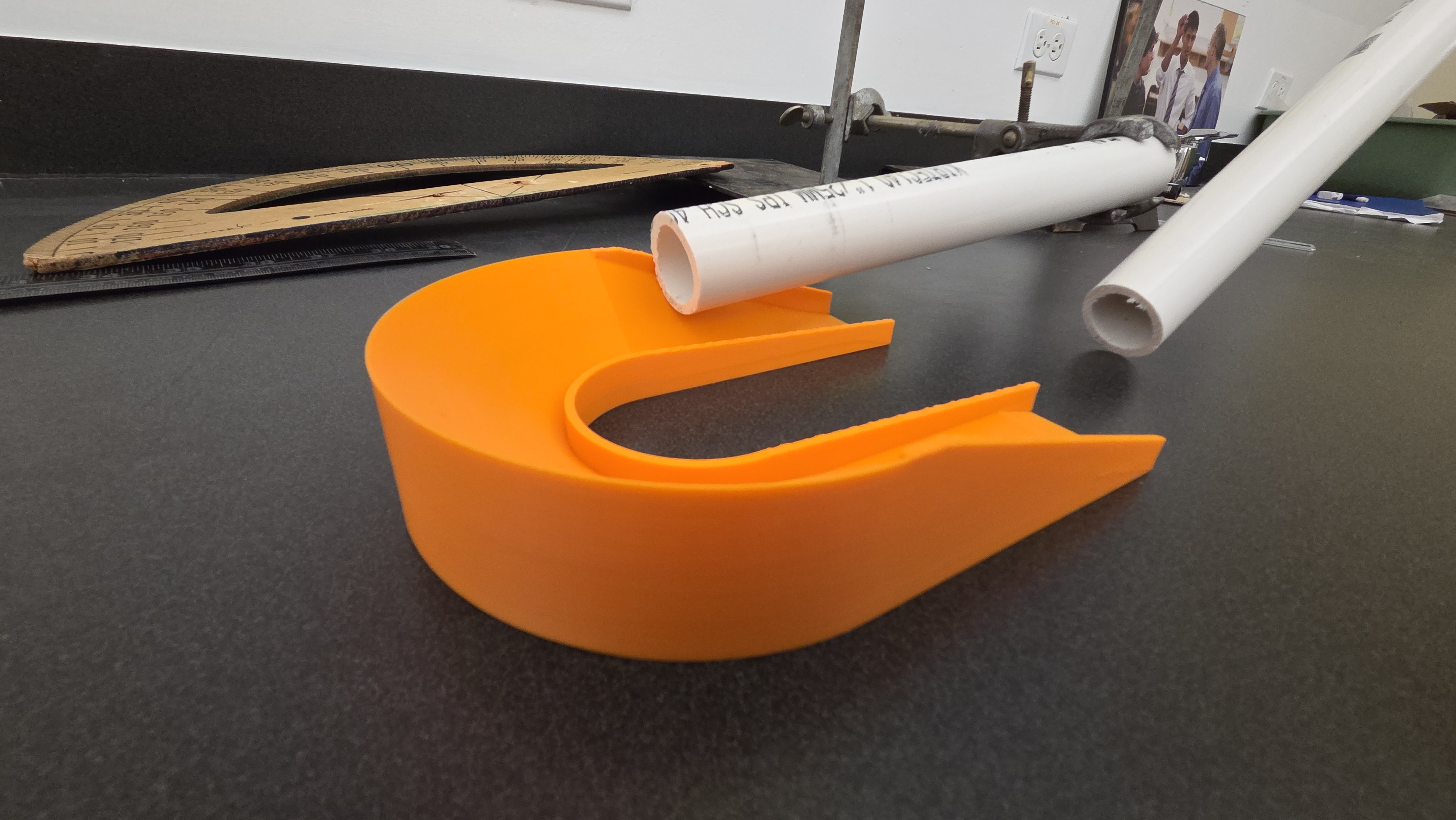
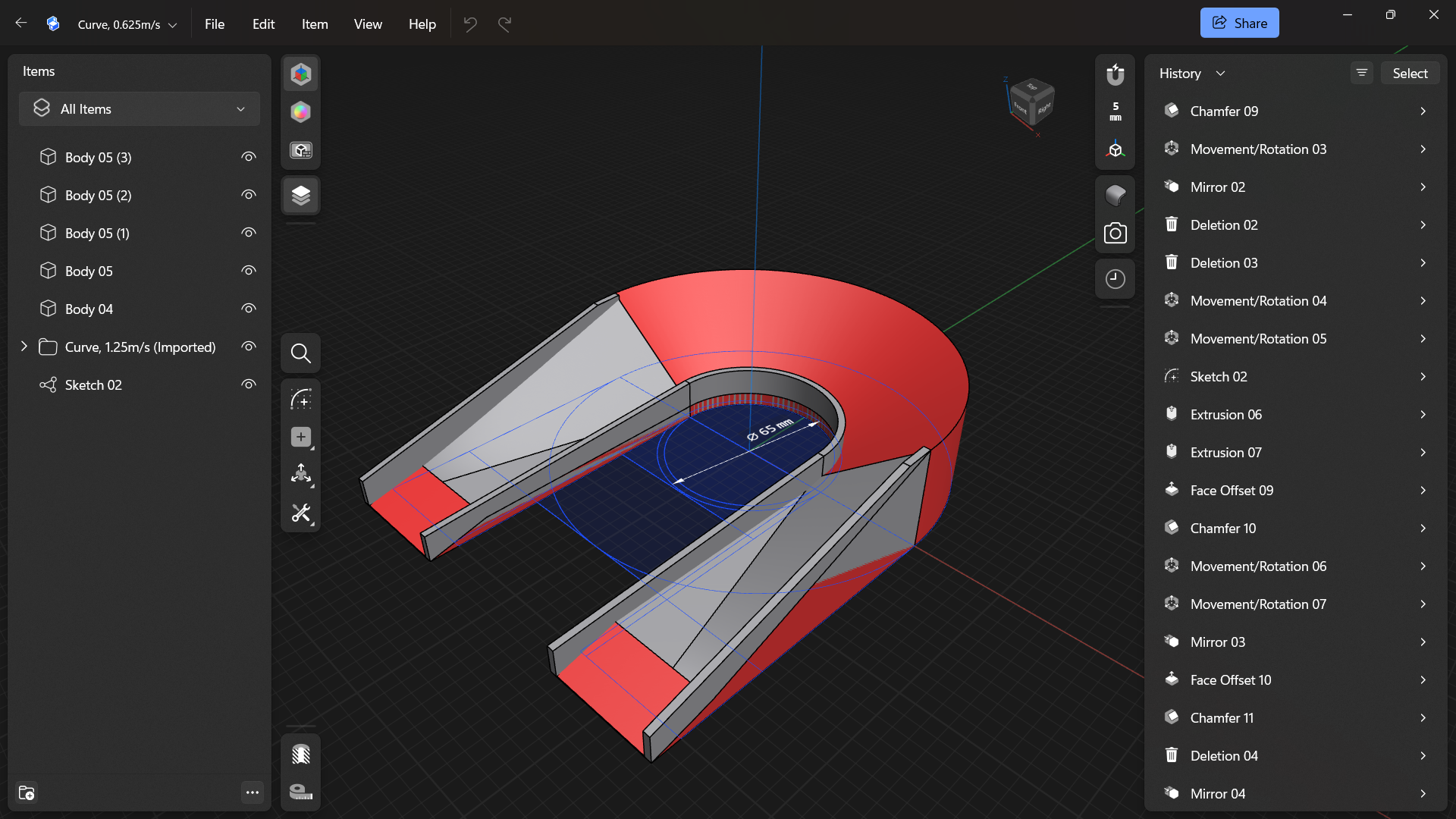
The primary learning objective of this activity is for students to use real-world practical scenarios to establish concrete understanding of the relationships between different types of forces, and to observe the mathematical behaviour of circular motion on a track.
Secondary learning objectives include:
Using the slides provided, give the class an overview of how centripetal force and normal force of an inclined plane can be combined to cause an object to turn in space.
Feel free to use the slides provided (1-12), physical demonstrations, and/or worked examples on the board for the following lesson.
Using the slides provided, give the students the details for the assignment. Give a brief overview of how chamfering works and some useful advice for effective design.
Separate students into groups of two or three.
Assignment Details:
Your task is to design and 3D print a 180° turn that will allow a marble of a given velocity to travel down the middle of the track and turn all the way around.
Recommended Velocity Range: 0.3 m/s – 0.7 m/s
This gives a range of angles between 10° and 45° within a turning radius of 5 cm.
Assessment Categories:
Design
Was your design built to the proper angle for your track?
Are the radius and height reasonable? Do you have an easy entry point for the marble?
To Submit: Your Shapr3D file or a technical drawing, your calculations
Efficiency
How much filament did you use? What infill level and what type of internal supports did you choose? Can your print support the force of the marble?
To Submit: A brief justification for your slicing choices (one or two paragraphs, discussing sustainability and integrity)
Testing
Does it work? Does the marble fly off the edge or roll down the ramp, or does it stick to the centre and travel all the way around?
To Submit: A brief discussion of your observations; explain what happened during your test. What could be improved?
After previewing the assignment, provide the link to Shapr3D. If students need a subscription, direct them to the link to a free student account.
One useful tool for this assignment is chamfering, particularly the 2-Distance Chamfer. Give students a demonstration or tutorial on how to effectively use this tool.
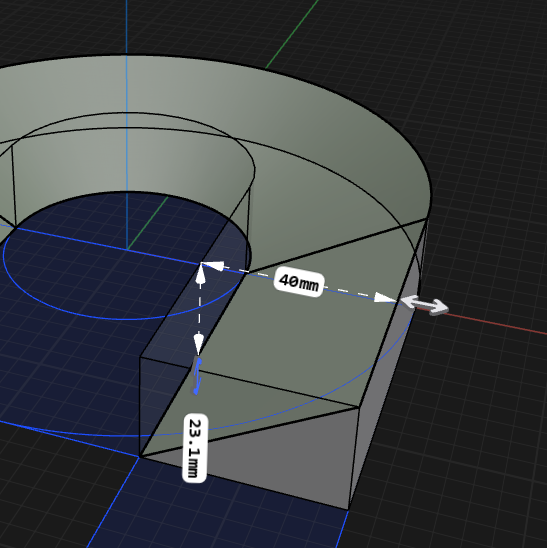
Provide the students 1-2 in-class periods to work on this assignment. While they work, ensure that you are circulating the room to catch any student confusion or difficulty.
Provide the groups 1-2 in-class periods to work on this assignment. While they work, ensure that you are circulating the room to catch any student confusion or difficulty.
If a student is stuck starting, prod them with questions such as “what is the most important thing you will need to know in order to build this? how can you find that?”. Make sure they have access to the slides and can go back to the derivation and equation if necessary. Allow them to learn the intricacies of the CAD software on their own, but feel free to respond to specific questions that may arise about the program.
When it is time for students to print, remind them of the sustainability and efficiency criterion. How can they print this in a way that is both effective and not wasteful? They should consider layer thickness, infill support shape and density, and number of wall loops when slicing. If they are new to slicing, show them the basics of how to upload files to 3dprinteros and how to properly slice for the appropriate printer.
Test the students' designs
Give the students at least a week before testing, in order to give them time to print and iterate versions, if necessary.
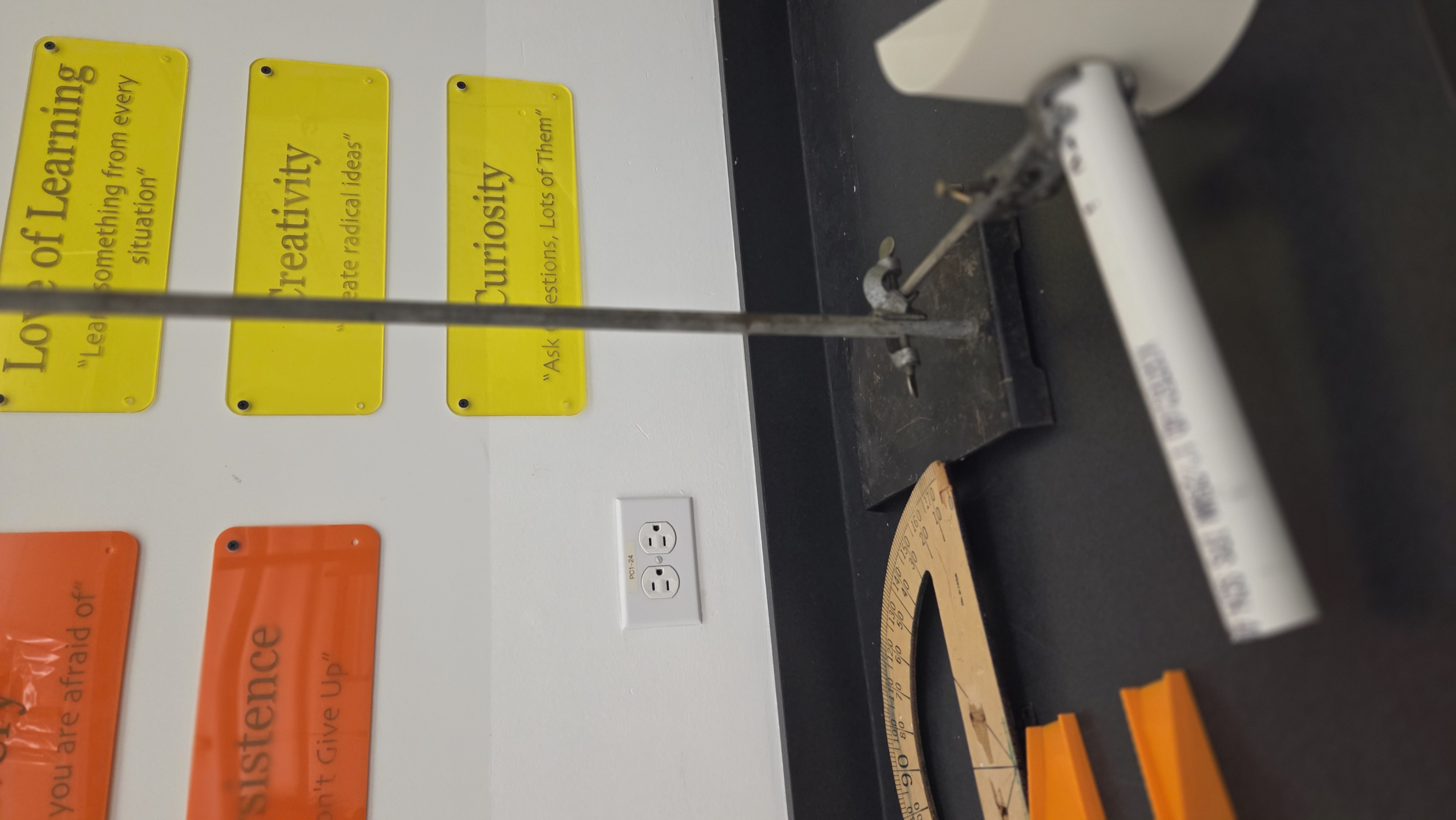
When testing, set up an apparatus for each group. The height of the ramp tube should be approximated based on the kinetic-potential energy relationship (h = v^2 / 2g). For a 0.625 m/s marble, the tube’s end should be about 2 cm above the surface. Shallower angles allow for less energy loss at the transition from the tube to the curve.
Measure and note the mass of each group’s submission.
Run three tests for each curve, recording video of each test (ideally in slow motion for better visual analysis). Determine how closely the marble maintains its trajectory through the turn. If it rises up in the bank, it is travelling too fast for the angle, and vice versa if it falls down.
Have students submit their calculations and discussions.
Having trouble? Let us know by completing the form below. We'll do our best to get your issues resolved quickly.
"*" indicates required fields