
- Loading…

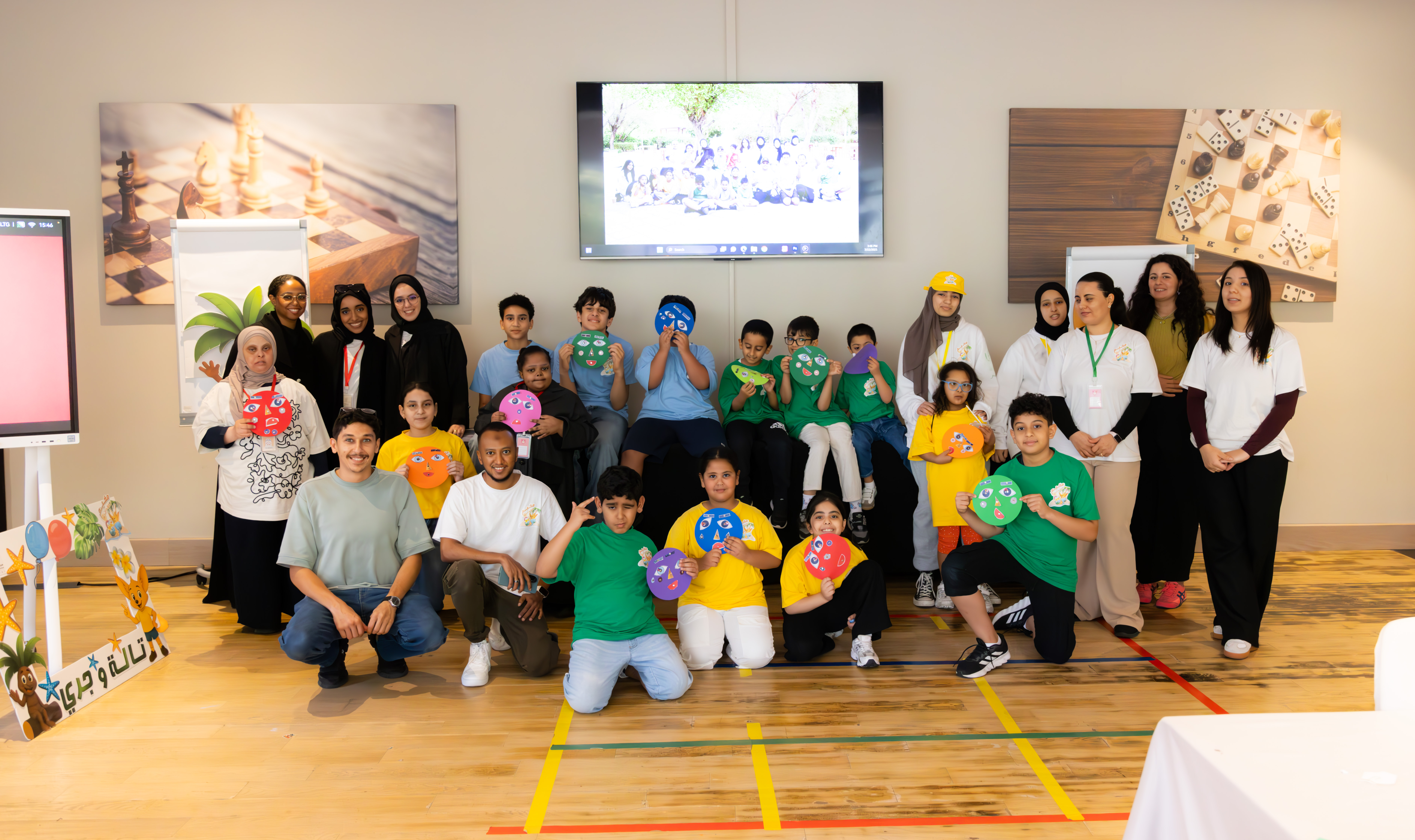
This session explores the role of emotions and how they can be expressed through colors, shapes, and sounds. Children engage in an interactive activity using the Makey Makey electronic kit to create an emotion-expressing poster. The session is designed for children with disabilities, with the aim of creating an inclusive, playful, and engaging space where participants can express emotions through hands-on interaction and sensory exploration.
تستكشف هذه الجلسة دور المشاعر وكيف يمكن التعبير عنها من خلال الألوان والأشكال والأصوات. يشارك الأطفال في نشاط تفاعلي باستخدام مجموعة Makey Makey الإلكترونية لإنشاء ملصق تفاعلي للتعبير عن المشاعر. تم تصميم الجلسة للأطفال من ذوي الإعاقة، بهدف توفير مساحة شاملة ومرحة وتفاعلية تمكّنهم من التعبير عن مشاعرهم بطريقة إبداعية ومشجعة.
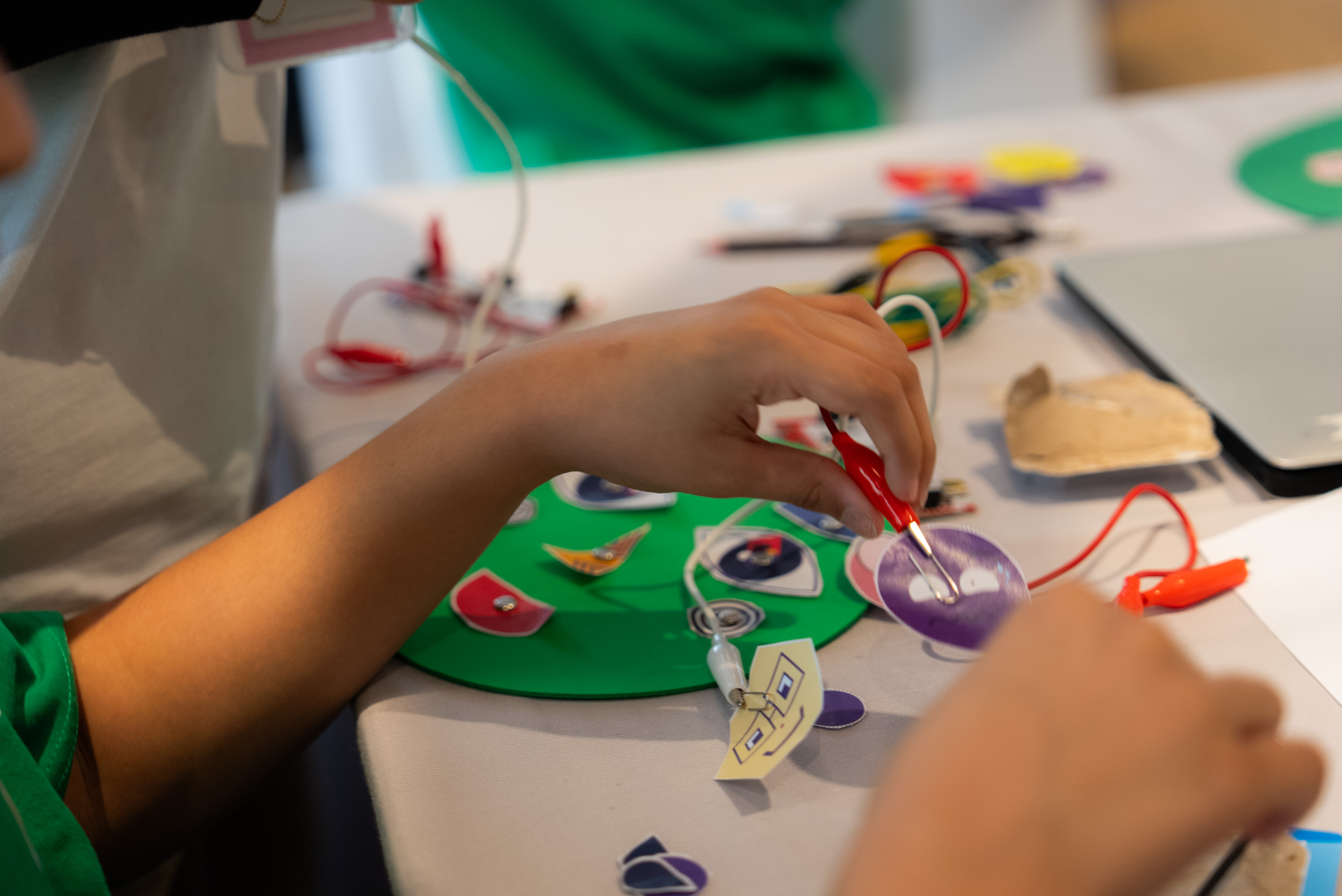
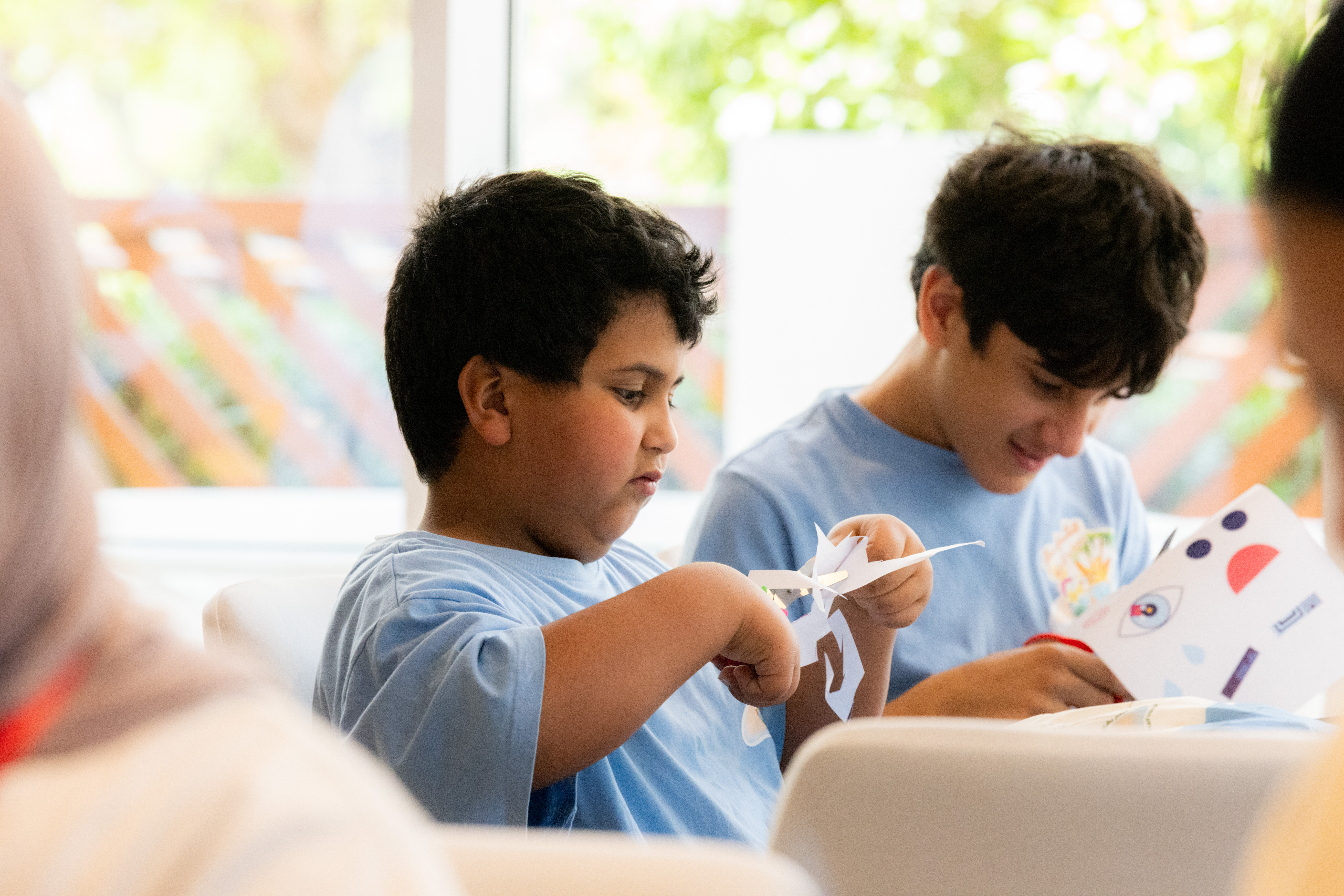
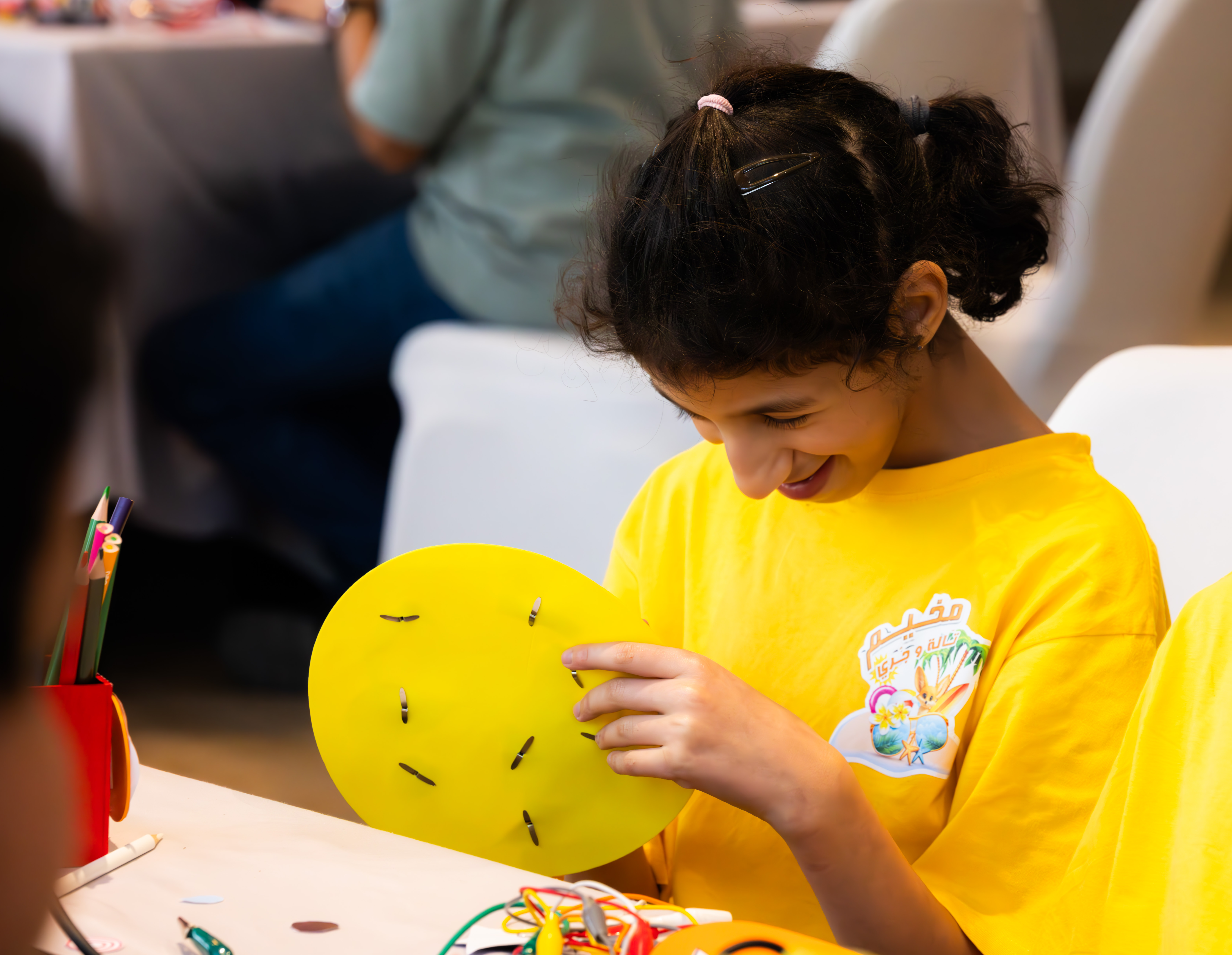
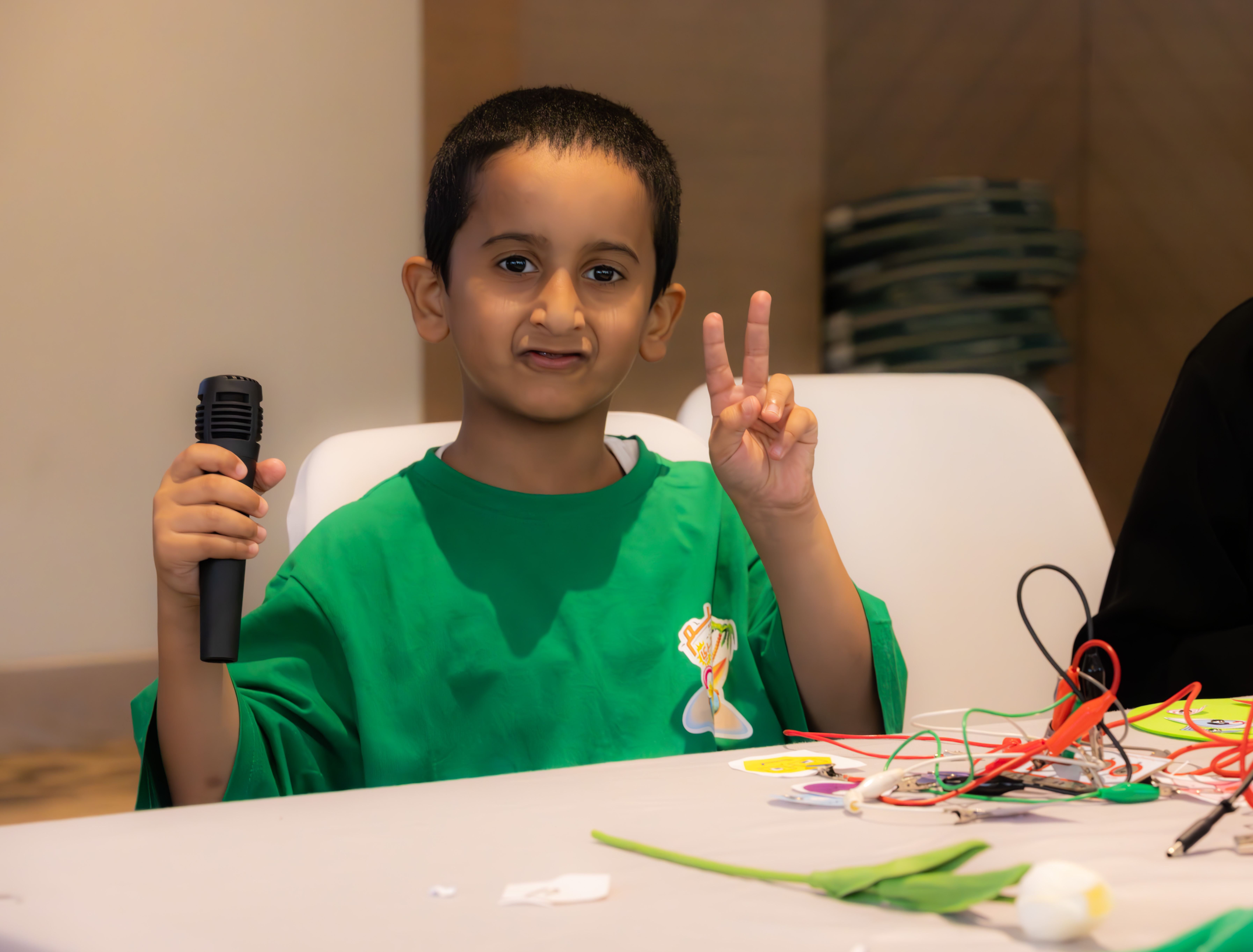
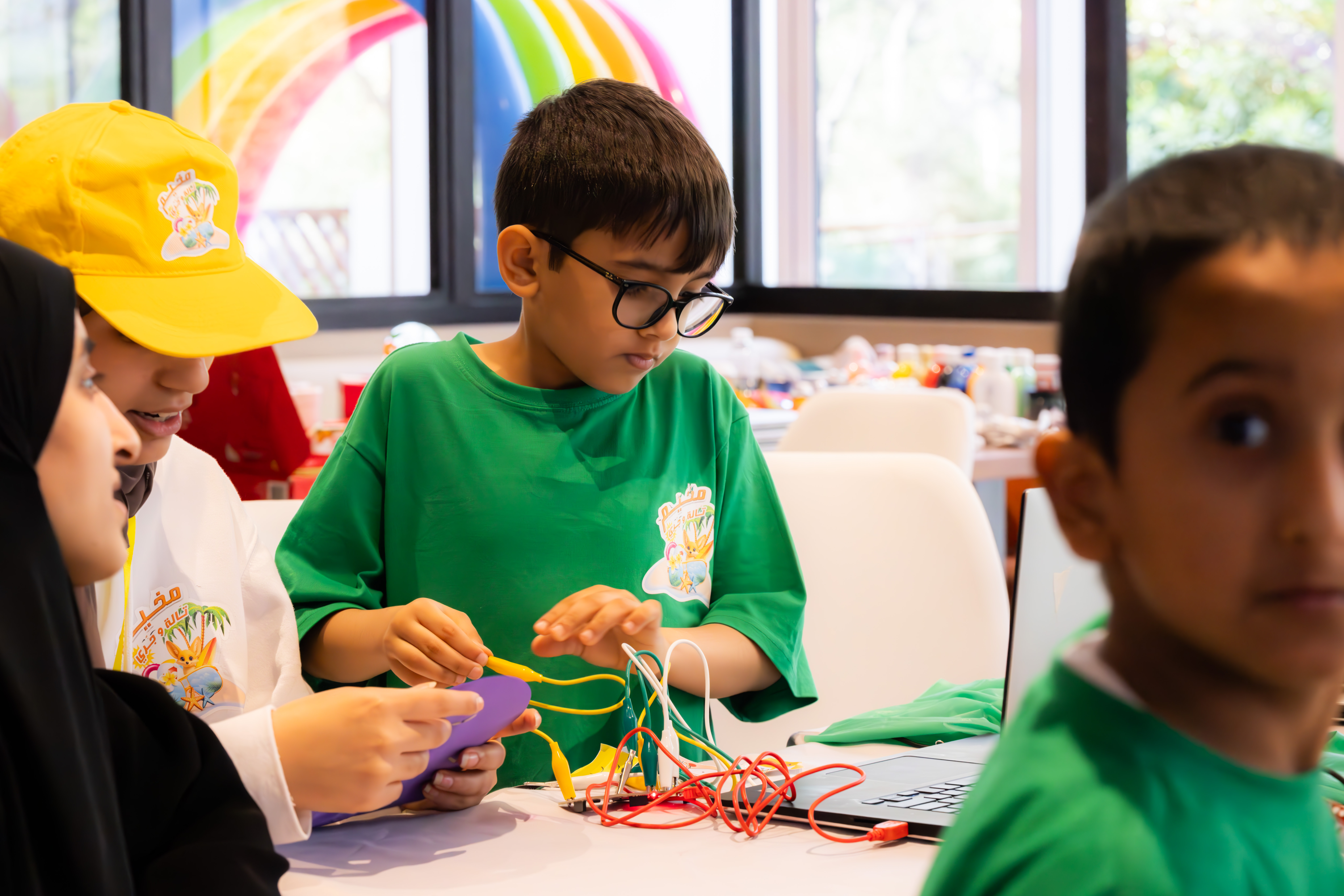
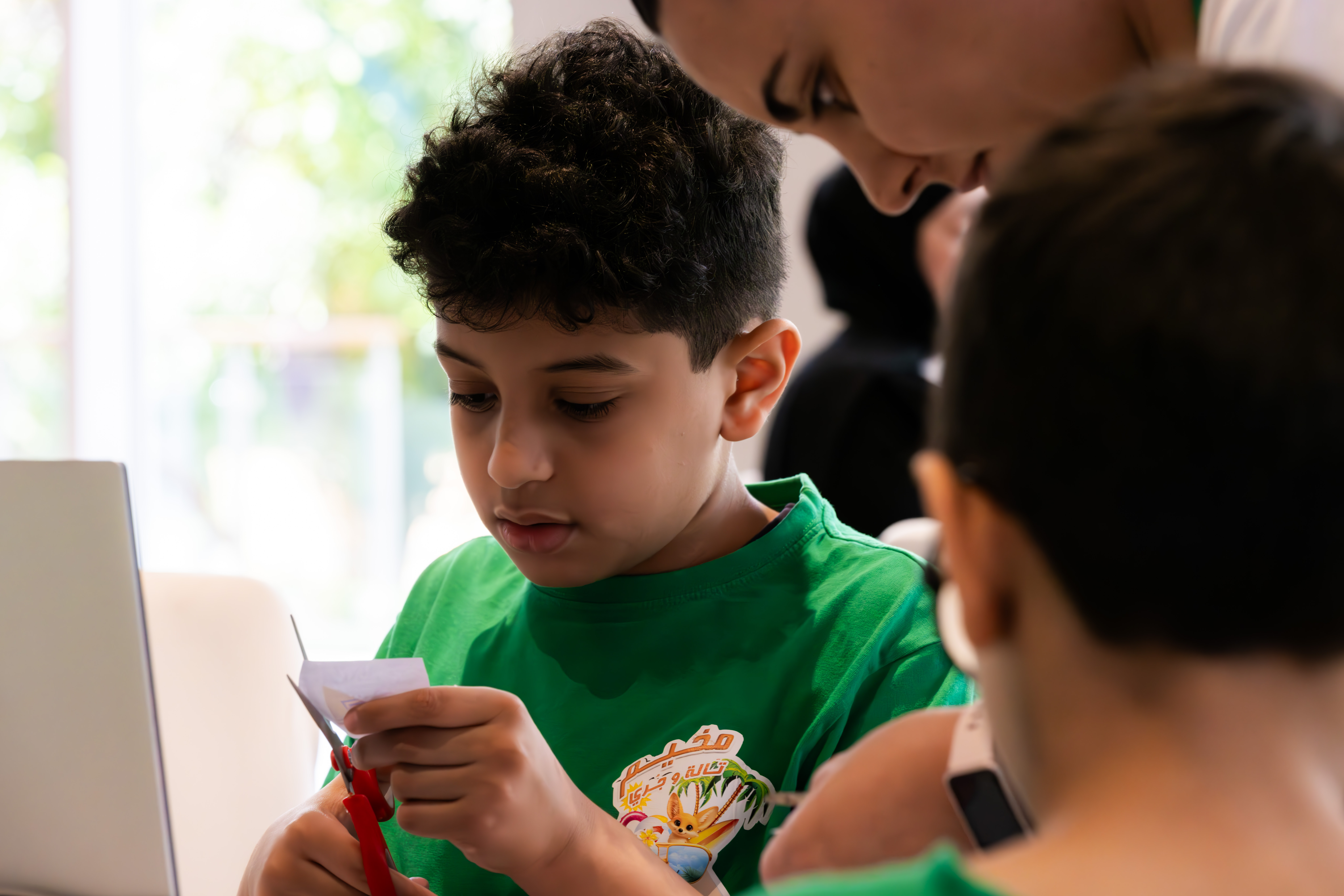
Access to the internet and a computer, Makey Makey kit, activity template, scissors, 8 brass fasteners per child, 5 metallic U pins.
الوصول إلى الإنترنت وجهاز كمبيوتر، عدة Makey Makey، قالب النشاط، مقص، ٨ دبابيس نحاسية لكل طفل، ٥ دبابيس معدنية على شكل U.
By the end of this session, participants will be able to:
بنهاية هذه الجلسة، سيكون المشاركون قادرين على:
The challenge is to explore how the same facial elements, when rotated and repositioned using brass fasteners, can express a wide range of emotions through movement, orientation, and composition.
يتمثل التحدي في استكشاف كيفية قدرة عناصر الوجه نفسها، عند تدويرها وإعادة ترتيبها باستخدام مسامير نحاسية، على التعبير عن مجموعة واسعة من المشاعر من خلال الحركة، والاتجاه، وتناسق التكوين.
The activity was tested with children aged 7–14 with varying types and levels of disabilities. The activity proved more complex for younger participants, who required additional support from volunteers. Older children, including those with more significant disabilities, showed strong engagement, particularly with the construction process and visual components of the activity.
تم اختبار هذا النشاط مع أطفال تتراوح أعمارهم بين 7 و14 عامًا ممن لديهم أنواع ومستويات مختلفة من الإعاقات. تبيّن أن النشاط كان أكثر تعقيدًا بالنسبة للأطفال الأصغر سنًا، حيث احتاجوا إلى دعم إضافي من المتطوعين. في المقابل، أظهر الأطفال الأكبر سنًا، بما في ذلك ذوو الإعاقات الأكثر شدة، تفاعلًا كبيرًا، خاصة مع عملية البناء والعناصر البصرية للنشاط.
- Participants arrive and receive their materials. - Introduction to Studio 5 and the session overview. - Introduction to the topic: understanding emotions and how they can be expressed through colors and shapes. - Introduction to the hardware and the Makey Makey kit. وصول المشاركين واستلام المواد الخاصة بالورشة. مقدمة عن ستوديو 5 ونبذة عن الجلسة. مقدمة عن الموضوع: فهم المشاعر وكيف يمكن التعبير عنها من خلال الألوان والأشكال. التعريف بالأدوات المستخدمة ومجموعة Makey Makey.

Let’s start we an experiment! Bouba and Kiki.
Let’s see how our brains connect shapes with sounds.
Imagine two shapes:
Now imagine two funny names: Bouba and Kiki.
Most people—kids and adults—will say:
Why?
Because our brains like to match things that feel similar. “Bouba” sounds soft and bouncy, just like a round shape. “Kiki” sounds sharp and quick, just like pointy edges.
لنبدأ بتجربة صغيرة! بووبا وكيكي 🌟
لنرَ كيف يربط دماغنا بين الأشكال والأصوات.
تخيل شكلين:
والآن تخيل اسمين مضحكين: بووبا وكيكي.
معظم الناس — أطفالًا وكبارًا — سيقولون:
لماذا؟
لأن أدمغتنا تحب أن تربط الأشياء التي تشعر بأنها متشابهة.
كلمة بووبا تبدو ناعمة وخفيفة، تمامًا مثل الشكل الدائري.
أما كيكي فتبدو حادة وسريعة، تمامًا مثل الزوايا المدببة.


We don’t just see with our eyes—we also feel shapes with our ears and sounds with our imagination.
Designers use this idea when they choose:
So when you design something, you’re not just making it look nice—you’re helping people feel something too.
نحن لا نرى بأعيننا فقط — بل نشعر بالأشكال بآذاننا ونسمع الأصوات بخيالنا.
يستخدم المصممون هذه الفكرة عندما يختارون:
لذلك عندما تصمم شيئًا ما، فأنت لا تجعله جميلًا فقط — بل تساعد الناس على الشعور بشيء ما أيضًا.

Imagine now how powerful it can be when we use the right colors and shapes to communicate our emotions.
Let’s test this idea. What do you think the following emotion corresponds to?
تخيل الآن مدى القوة التي يمكن أن نمتلكها عندما نستخدم الألوان والأشكال المناسبة للتعبير عن مشاعرنا.
لنختبر هذه الفكرة. برأيك، إلى ماذا ترتبط المشاعر التالية؟


ما هي الكهرباء وكيف تعمل؟

A circuit is a simple path that lets electricity move and do something useful.
Think of it like a road:
Electricity goes from the positive (+) side of the battery, through the wire, into the light, and back to the negative (–) side.
When the path is complete, the light turns on. When the path is broken, the light turns off.
الدائرة الكهربائية هي مسار بسيط يسمح للكهرباء بالحركة والقيام بشيء مفيد.
تخيلها مثل طريق:
تتحرك الكهرباء من الطرف الموجب (+) للبطارية، عبر السلك، إلى المصباح، ثم تعود إلى الطرف السالب (–).
عندما يكون المسار مكتملًا، يضيء المصباح. وعندما ينقطع المسار، ينطفئ المصباح.

In the second image, we added a switch.
The switch works like a door:
The switch helps us control when the circuit is on or off.
في الصورة الثانية، أضفنا مفتاح تشغيل.
يعمل المفتاح مثل الباب:
يساعدنا المفتاح على التحكم في تشغيل وإيقاف الدائرة الكهربائية.
لنبدأ بجانب التصنيع!
Here the step by step to follow:
إليك الخطوات التي يجب اتباعها:

قم بتوصيل جهاز Makey Makey.
قم بتوصيل المشاعر بجهاز Makey Makey باستخدام مشابك التمساح.

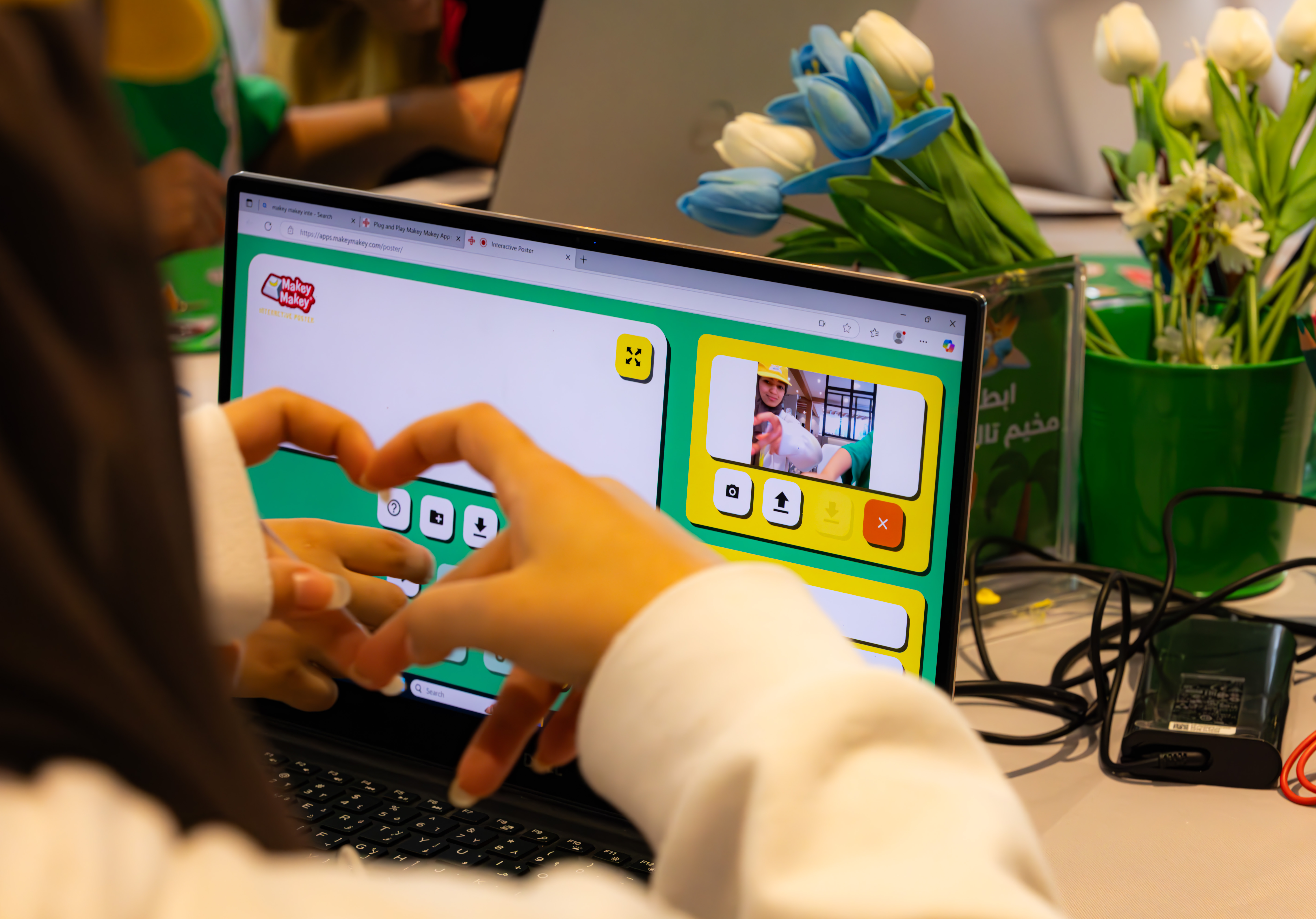
قم بتوصيل Makey Makey وافتح المنصة التفاعلية
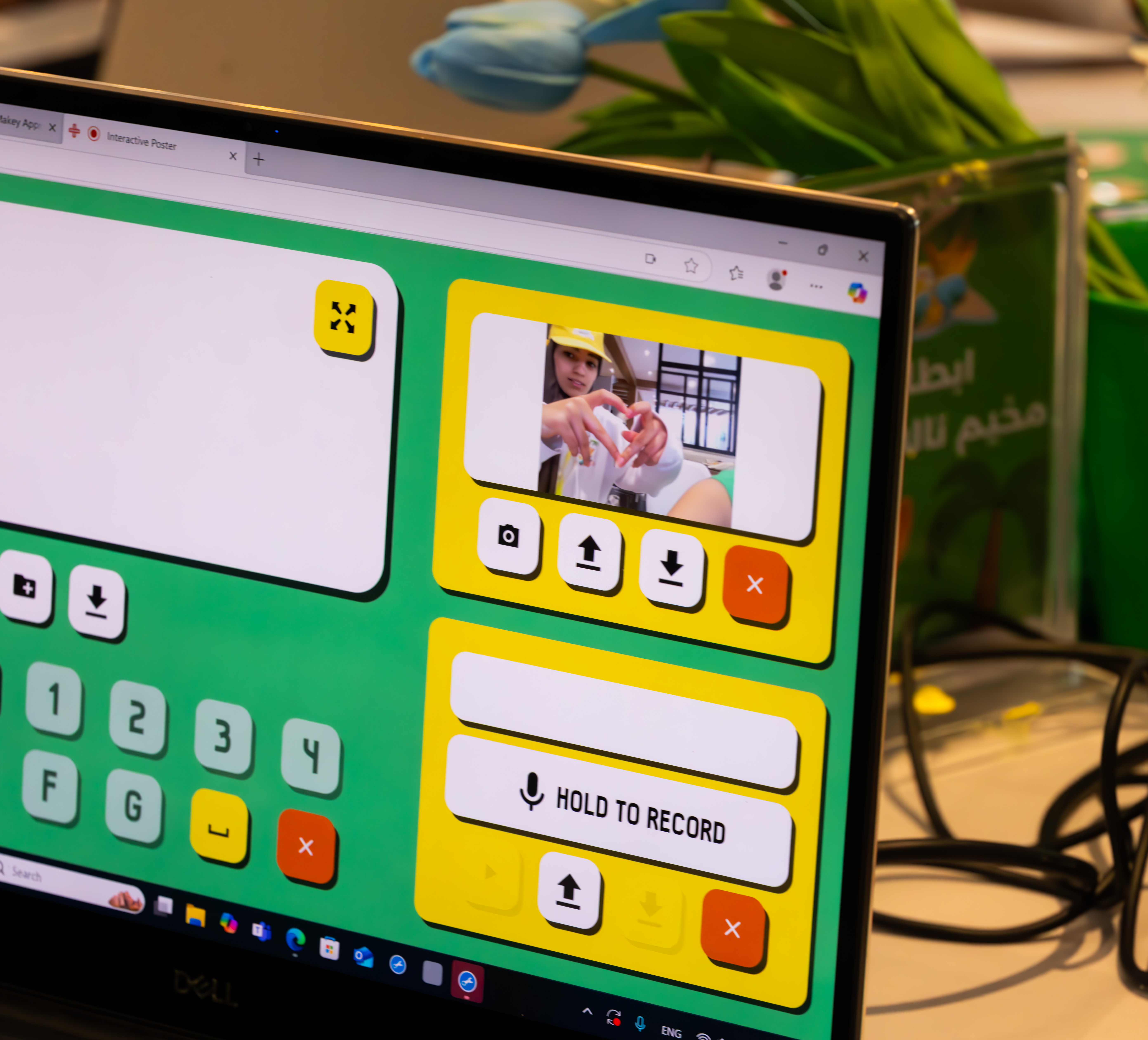
Plug in the Makey Makey and open the interactive platform: https://apps.makeymakey.com/poster/
– Assign each emotion to a selfie using your face cut-out.
– Add a sound to each emotion.

شغّل ملصق المشاعر الخاص بك واستمتع!


Having trouble? Let us know by completing the form below. We'll do our best to get your issues resolved quickly.
"*" indicates required fields