
- Loading…
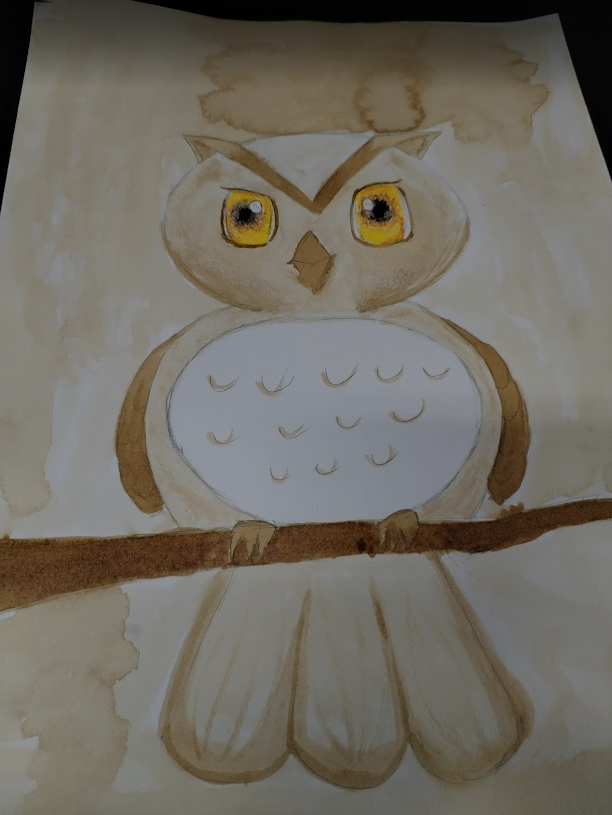
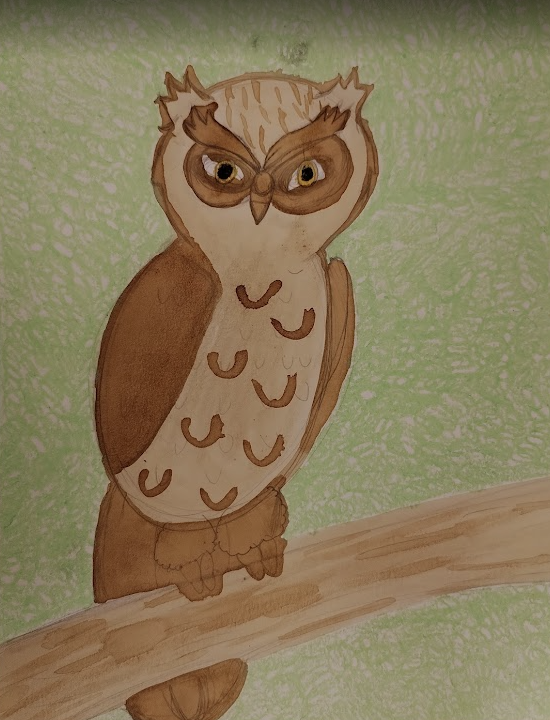
In this lesson, students get inspired by the iconic “Tecolotes” (owls) of artist Arnoldo Ramírez Amaya, and explore color value by extracting natural pigments from coffee waste.
Instead of using synthetic, microplastic-based paints, students learn how to standardize a natural tint through precise water-to-coffee ratios. They create a physical tonal scale to understand how concentration affects visual output. The final result is a vibrant, sustainable masterpiece that combines the earthy textures of bio-materials with the high-contrast energy of oil pastels.

Materials Needed:
For evaluation:
By the end of this experience…
To collect feedback, I utilized a combination of direct observation during the classroom session and an iterative dialogue with Gemini (AI) to audit my lesson’s alignment with National Core Arts Standards (NCAS) and SDG 12. The specific feedback highlighted that defining “Digital Fabrication” through bio-extraction successfully bridges the gap between traditional art and modern process engineering, provided the “Technical Calibration” (the tonal scale) was assessed as a measurable skill. The assessment protocol aligns with the learning goals by shifting the focus from purely aesthetic outcomes to material literacy, ensuring the 4-step gradient acted as evidence of technical mastery. The pacing—separating the “Engineering” (extraction) from the “Expression” (Amaya-inspired painting)—made the lesson accessible within the students’ Zone of Proximal Development (ZPD).
The complete reflection process can be found in my learning diary, M3 Field Activity
Students transform raw coffee concentrate into a "Digital Palette" of four distinct tonal values. Using a standardized "Mother Batch" provided by the teacher, students engineer dilutions using precise tablespoon measurements. This step establishes the technical foundation of standardization and material literacy before artistic application begins.
Teacher prepares a highly concentrated “Mother Batch” of coffee (reduced by simmering on a stove for 20 minutes) before class. In this phase, students act as material engineers to create their “Bio-Ink” gradient. Ensure each student has a testing strip of 300gsm watercolor paper, four small mixing containers, and a tablespoon.
Execute the Dilution Recipe: Instruct students to create the following four shades in their containers:
Tone 1 (Concentrate): 1 tablespoon of “Mother Batch” + 0 tablespoons of water.
Tone 2 (Dark): 1 tablespoon of “Mother Batch” + 1 tablespoon of water.
Tone 3 (Medium): 1 tablespoon of “Mother Batch” + 3 tablespoons of water.
Tone 4 (Light Wash): 1 tablespoon of “Mother Batch” + 6 tablespoons of water.
Create the Calibration Strip: On the testing paper, students paint a small square of each tone from lightest to darkest.
Persistence Check (VA:Cr2.1.7a): If the tones look too similar, students must persist and adjust their recipes (adding more water or concentrate) until four distinct, visible steps are achieved.
Tip: Label each square with the “recipe” (e.g., 1:3) to ensure the result is repeatable.

Students analyze the visual language of Arnoldo Ramírez Amaya to sketch their own "Tecolote" (owl). They use oil pastels to define high-contrast focal points, such as the eyes and background textures. The wax in the pastels creates a "resist" layer that will repel the water-based coffee ink in the next step.
Focus on the expressive, “wild” energy of Guatemalan Expressionism. Provide some interesting facts about the artist and provide reference pictures for students to draft. (You could use this presentation as a reference: https://view.genially.com/66f2f4c707f51dc368060515)
Pencil Sketch: Lightly sketch the owl’s silhouette. The owl should be the “hero” of the page, occupying at least 60% of the space.
The Oil Pastel Layer: Use oil pastels for the iris of the eyes to create a vibrant “pop” against the earthy coffee.
Technical Note: Press firmly with the pastels. The heavy wax layer is what prevents the coffee tint from soaking into those specific areas, preserving the highlights.

Students apply their engineered Bio-Inks to their owl sketches, moving from light washes to dark details. This step requires careful layering to build depth and shadow while maintaining the "Amaya" style. Students observe how the organic tint interacts with the pre-applied oil pastel resist.
This is where the process is synthesized into a final masterpiece. Provide the following instructions to the students:
Drying: Lay the works flat to prevent the coffee from pooling and creating “tide lines”.

Students display their final "Amaya Owls" alongside their tonal calibration strips in a gallery walk format. They analyze a short text on the environmental impact of synthetic paints versus biomaterials to "defend" their choice of coffee ink. This step connects their artistic process to SDG 12: Responsible Consumption and Production.
-The “Sustainable Defense” Reading: Provide students with the following text: Art with a Conscience: From Plastic to Pigment
-Gallery Walk & Peer Q&A: Students rotate in silence for 5 minutes. After the walk, each student must “defend” their work by answering these two questions for a peer:
-Written Evaluation (Exit Ticket): Students answer the questions provided in the reading document.
-Final Reflection: Students complete the final reflection provided in the reading document.
DISPLAY SHORT VIDEO OF MY STUDENTS WORK: Tecolote Amaya Project
This final step provides the formal tools to measure student success across technical, artistic, and sustainability goals. It includes a comprehensive Rubric for the teacher and an Exit Ticket for the students. These materials ensure that the "Bio-Ink" process is evaluated with the same rigor as a traditional science or art lab.
1. The “Tecolote Amaya & Coffee Tint” Summative Rubric
2. Student Exit Ticket (Evaluation Questions)
Have students answer the four targeted questions at the end of the “Art with a Conscience: From Plastic to Pigment” reading document to check for understanding:
3. Final Reflection Prompt
Ask students to complete this “Bridge Sentence” in their learning diaries:
Having trouble? Let us know by completing the form below. We'll do our best to get your issues resolved quickly.
"*" indicates required fields