
- Loading…

The World Comes Back to Me is a global citizenship lesson through systems thinking and STEM
Grade: Grade 8–9
Duration: 120–150 minutes
Subjects: Global Citizenship, STEM, Environmental Education, Social Studies
Technology: micro:bit, MakeCode
Key Concepts: Interdependence, Global Citizenship, Systems Thinking, Responsibility, Solidarity, Sustainable Development
Summary:
Students explore how their everyday lives are connected to people, places and systems around the world. They begin by tracing the hidden journey of an everyday product and discover the many people, resources and countries involved in bringing it to them.
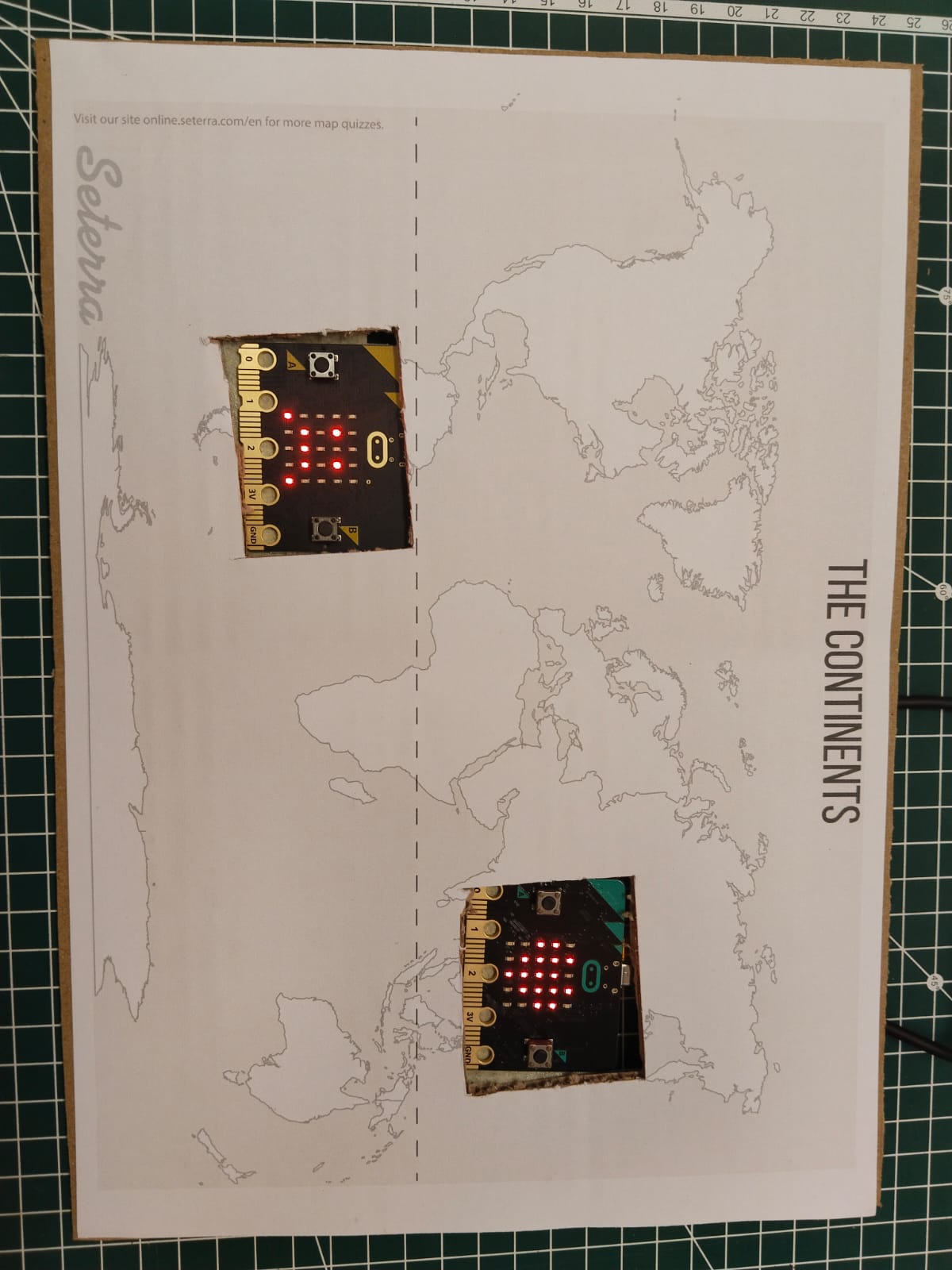
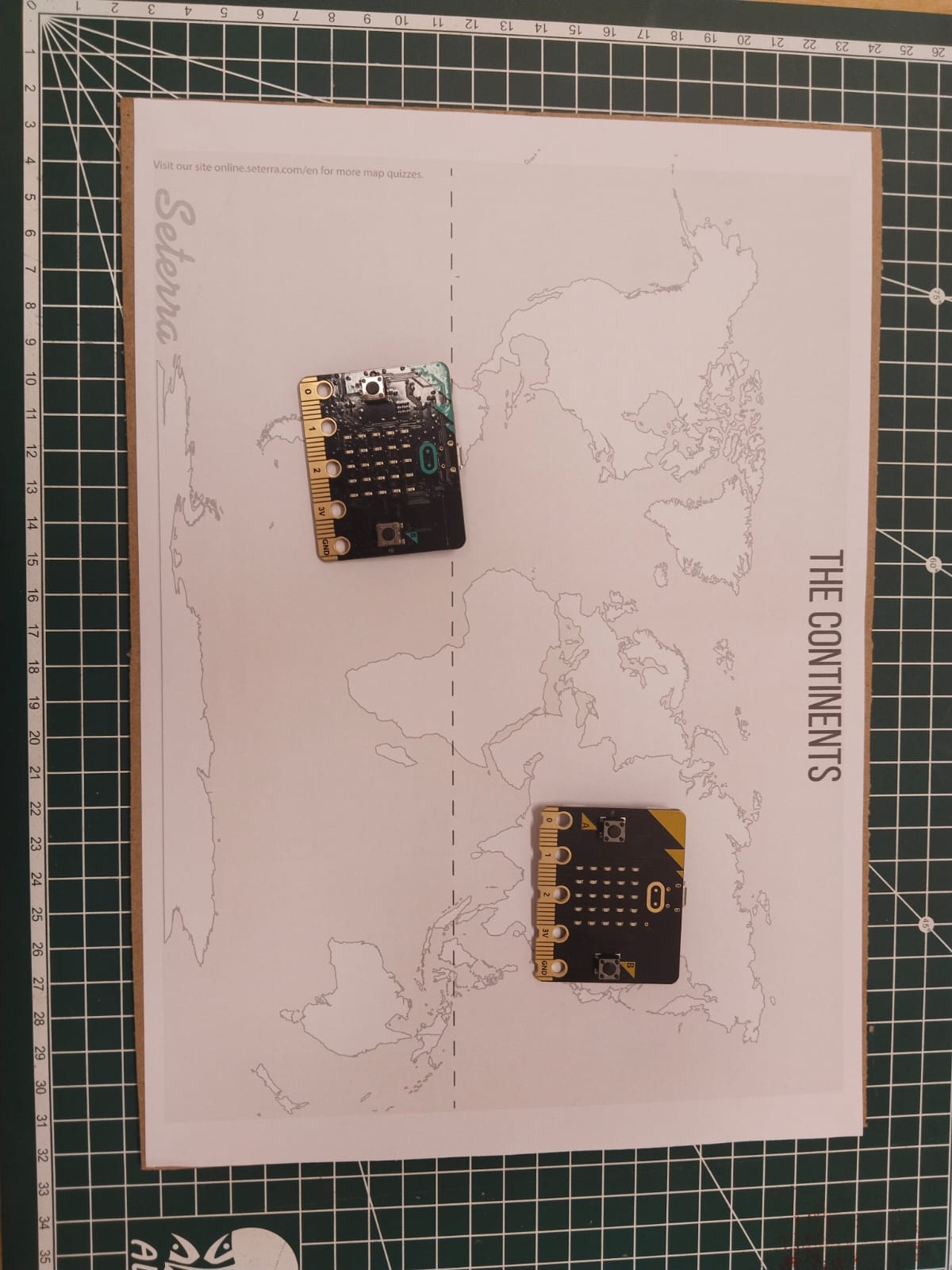
They then investigate different “What If?” scenarios to see how an event in one place can create effects in distant parts of the world. Students make these invisible connections visible through a large world map.
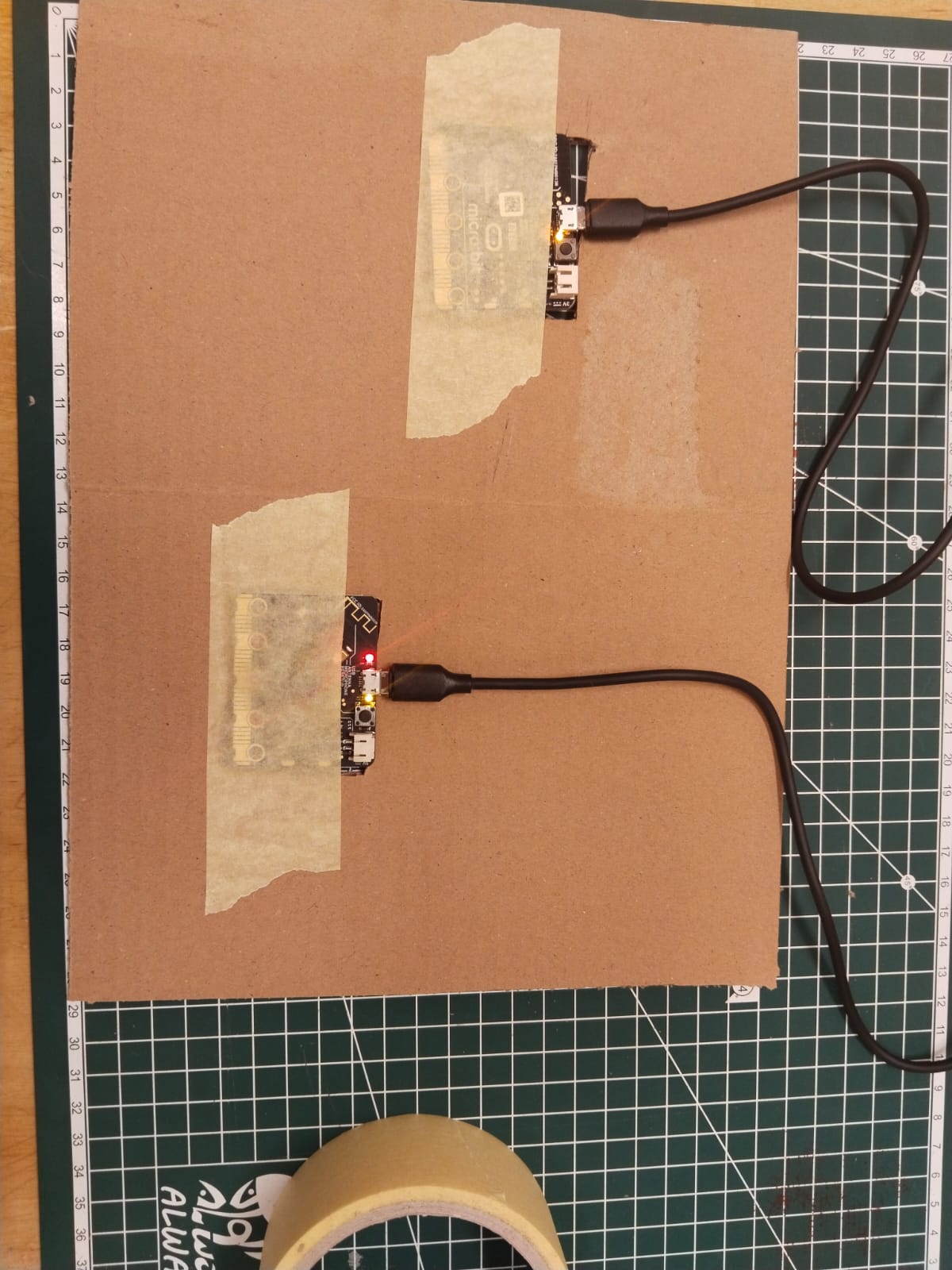
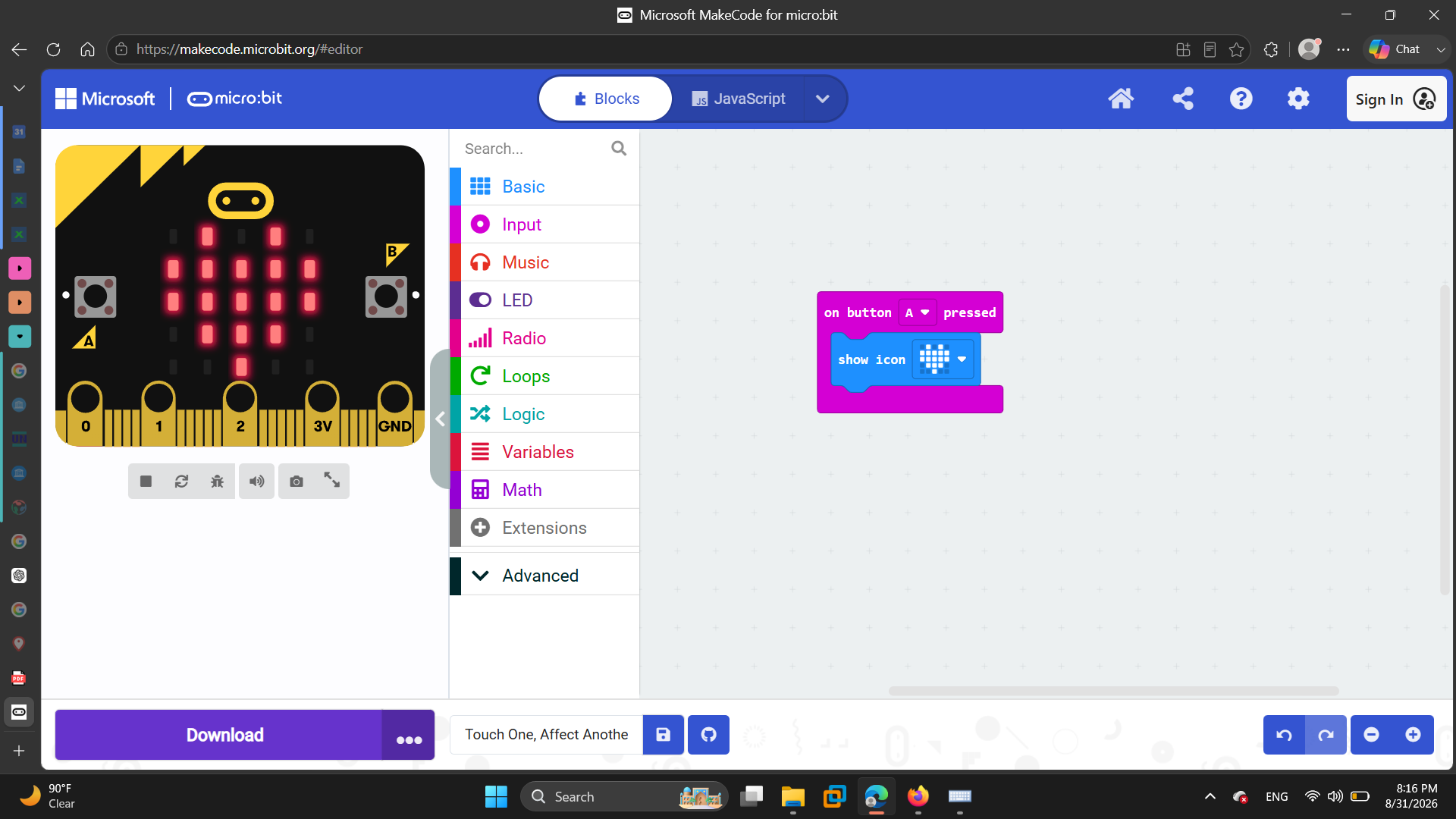
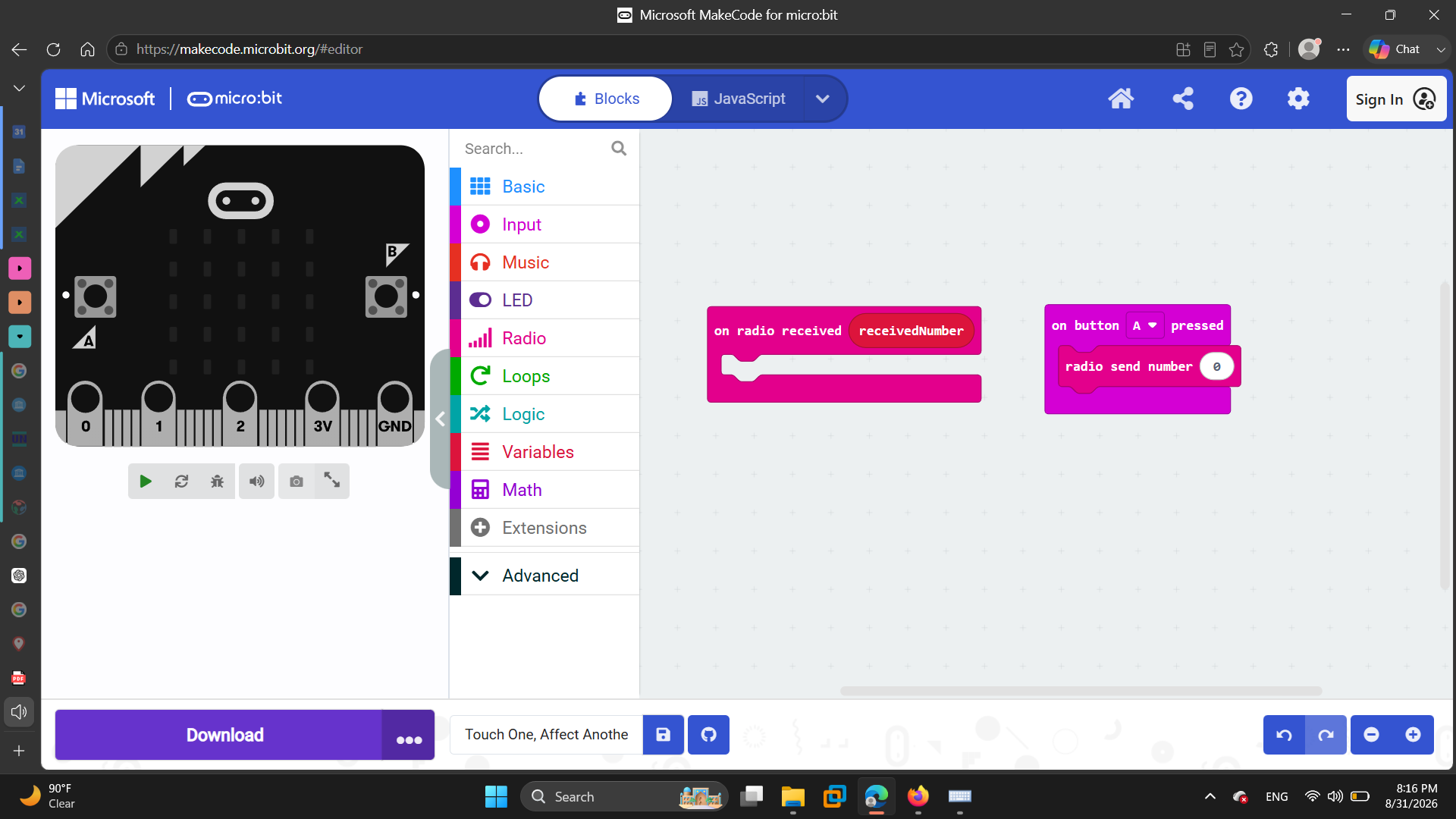
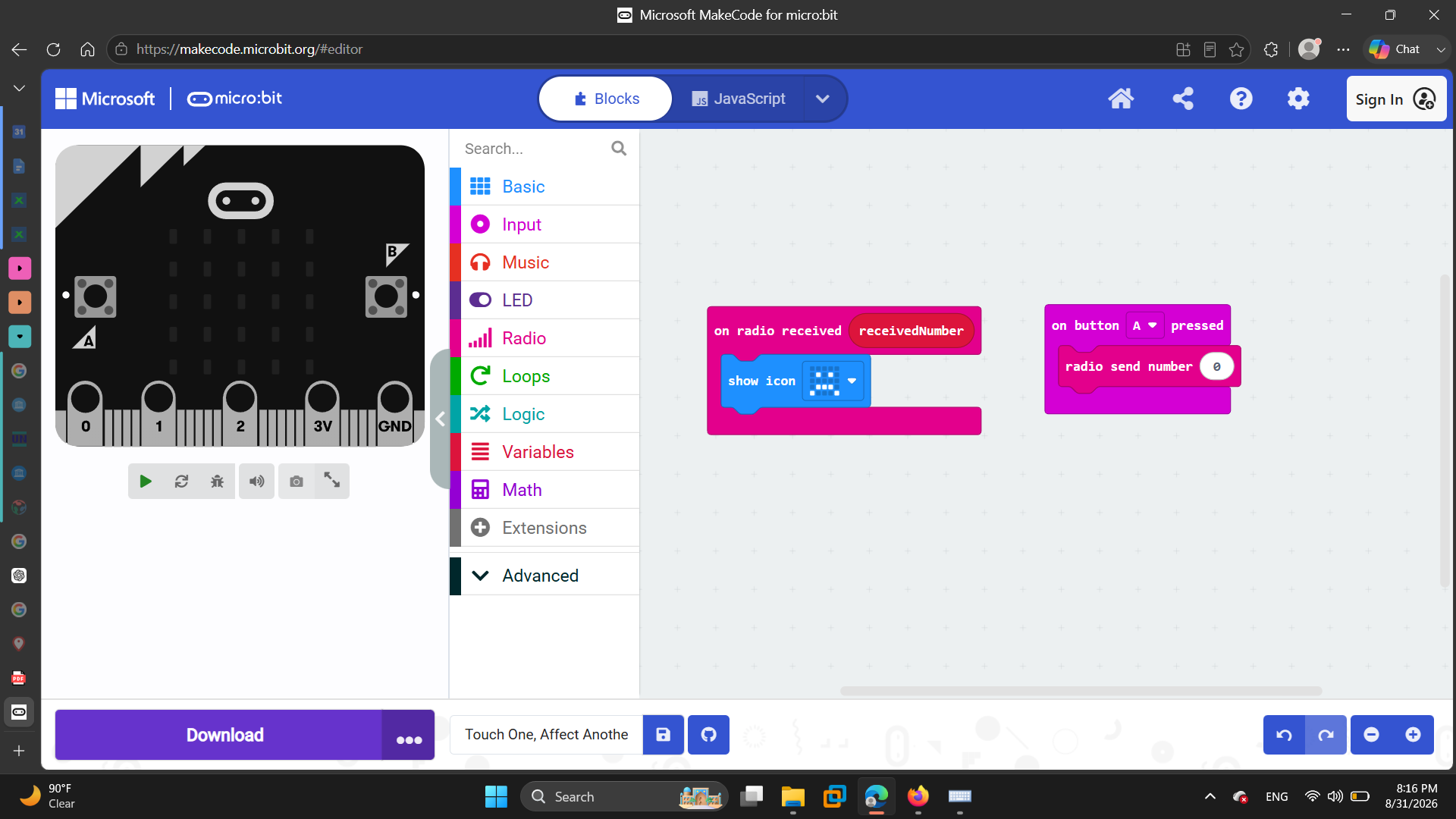
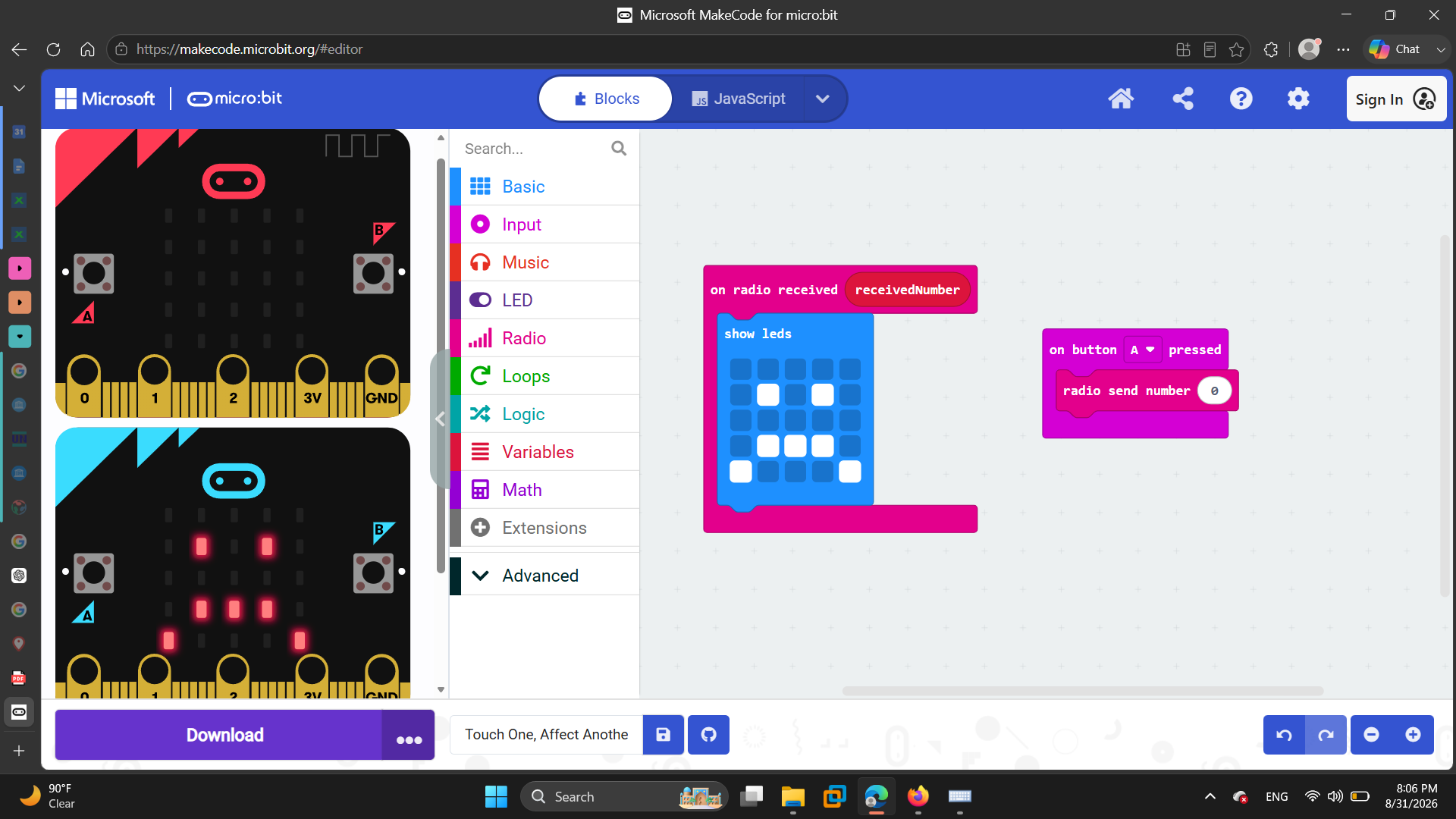
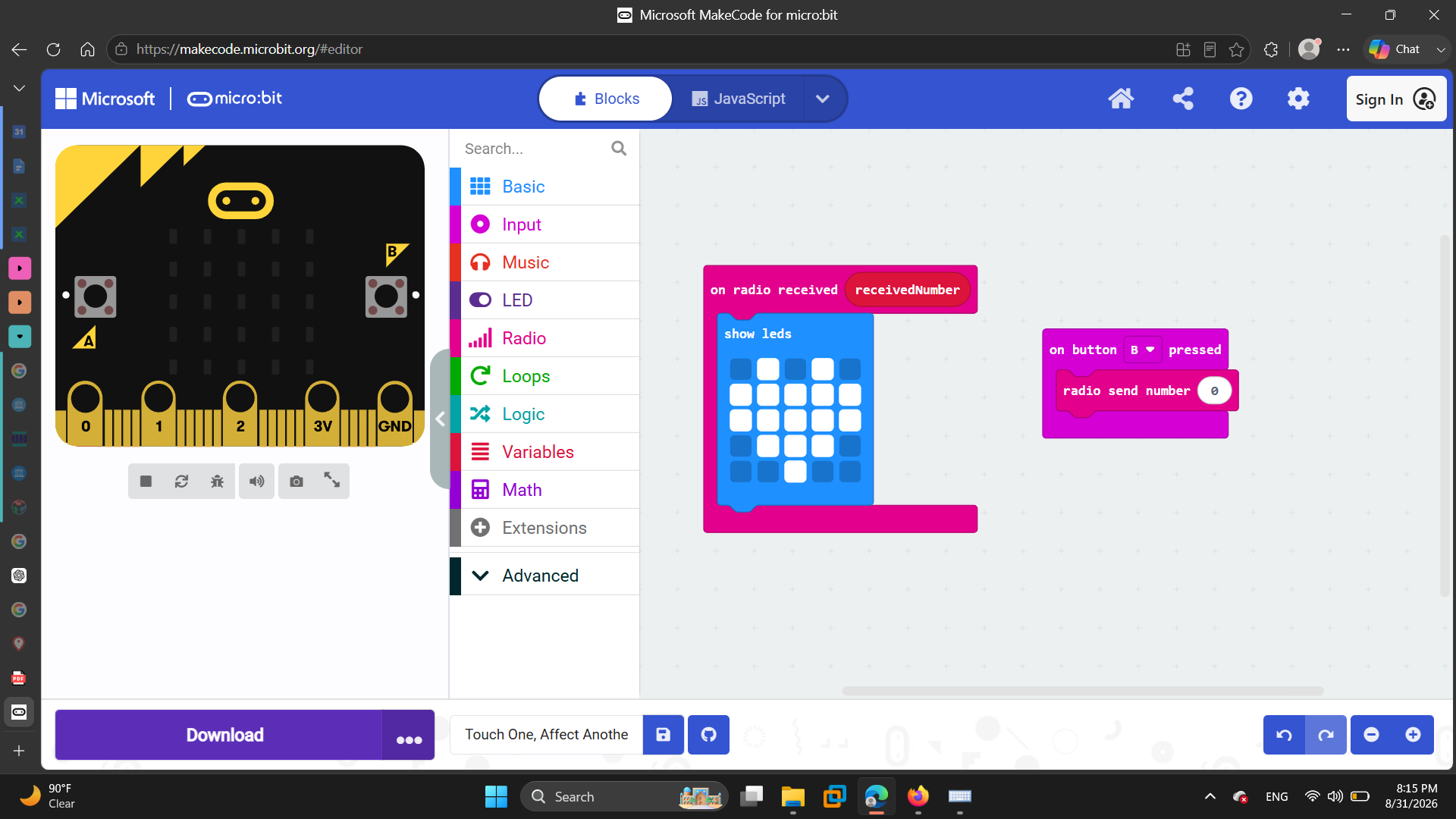
In the STEM activity “Touch One, Affect Another,” students use two micro:bit and radio communication to model these connections. A button pressed at one location sends a message to another location, causing the second micro:bit to display a sad face. Later, the same system is changed so that an act of solidarity sends a heart instead, highlighting that connections can spread not only harm, but also care and support.
Finally, students return from the global scale to themselves and identify how their own choices and initiatives can contribute to positive change. They create a My Global Citizen Action Card and are encouraged to think not only about what they can do, but how far one action could travel when others join it.
After this lesson, students will be able to:
This lesson plan brings students back to the central question: If the world is connected, what responsibility comes with that connection?
Global Citizenship Connections: This lesson develops key Global Citizenship Education themes
The lesson connects these ideas through the progression: Discover → Connect → Understand consequences → Take responsibility → Act
Discovering Our Hidden Connections: Here, students will think and discover the connections between everyday products they use and different countries across the world! Suggested time: 25–30 minutes
1- Introduce the challenge: Show students an everyday object such as a smartphone, T-shirt, chocolate, packaged food or water bottle.
2- Tracing the product: Divide students into small groups.
3- Build the global picture
4. Discuss
5. Expand the idea
6- Introduce the key idea: The world is made of connected systems. What happens in one part can affect another.
Seeing the Ripple Effect: In this Activity, we will ask puzzling questions: What if a part of the chain is missing? How will it affect the others? Suggested time: 25–30 minutes
5- Introduce the idea: In an interconnected system, there may be many places where a different decision can change what happens next.
Activity Core Idea is: Modeling Global Interdependence with micro:bit Micro:bit is a beginner-friendly smart board that has a microcontroller and built-in sensors and actuators. We will build code through block programming, via the MakeCode platform. The code is simple and connected to the past activity: If something happens, another thing is initiated Suggested time: 35–45 minutes


8. Discuss
9. Introduce the key idea: Connection does not only allow problems to spread. It also allows people to support one another and create change together.
From Global Awareness to Personal Agency: After seeing the world, let's return to ourselves and our role in the world! Suggested time: 25–30 minutes
Now, each student will fill "MY GLOBAL CITIZEN ACTION CARD" Suggested time: 10–15 minutes
1- Give each student an action card, or make students write in their notebooks the following:
2- Lesson Summary: At the end of the lesson, bring students back to the central question: If the world is connected, what responsibility comes with that connection?
Having trouble? Let us know by completing the form below. We'll do our best to get your issues resolved quickly.
"*" indicates required fields