
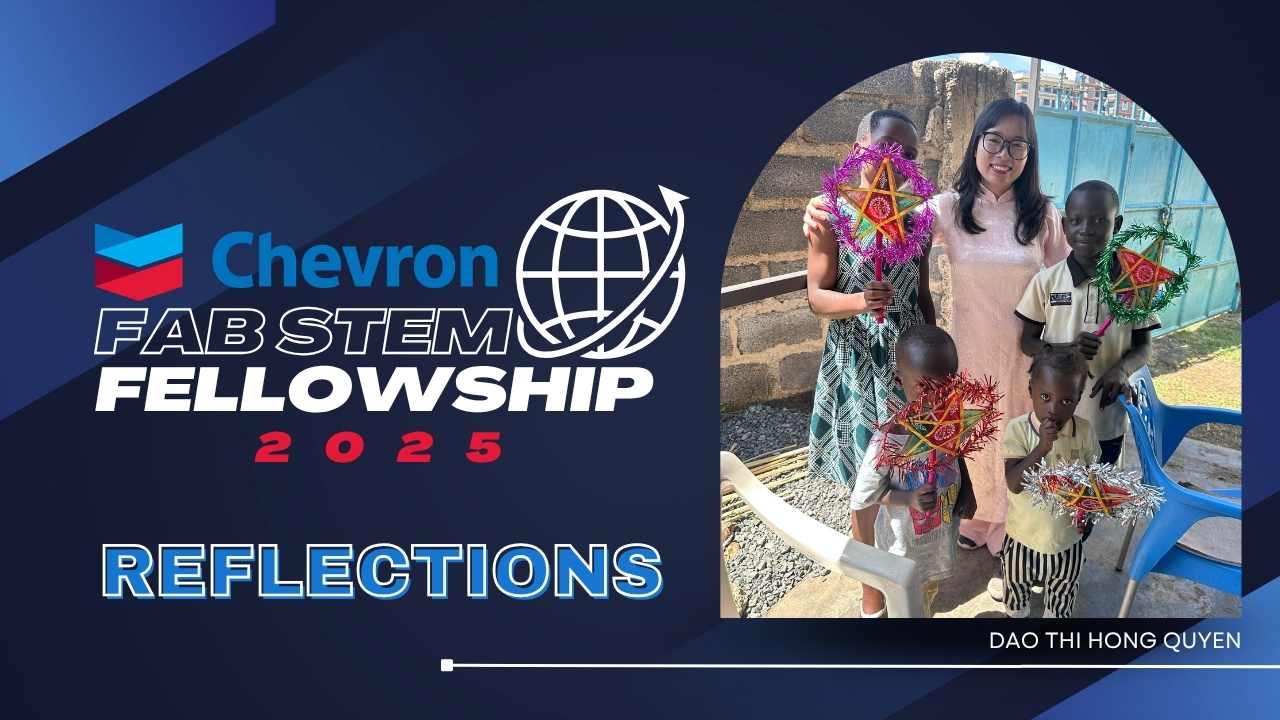
As part of the 2025 Chevron Fab STEM Fellowship, Dao Thi Hong Quyen traveled across the United States and Kenya, engaging with Fab Labs, educators, and communities to explore how digital fabrication can expand access to STEM education.
What emerged from her experience was not only a set of technical insights, but a deeply human philosophy she calls “Fab Phiêu”, a Vietnamese concept of being fully “in the flow,” where making blends hard skills with emotional connection and cultural meaning.
In her full reflection, linked below, Dao shares how this journey reshaped her understanding of what Fab Labs can be and who they are for.
Read Dao’s full Chevron Fab STEM Fellowship reflection (link)
Between precision and purpose
Dao’s fellowship journey highlights the diversity of the global Fab Lab network. In Tulsa, Oklahoma, she encountered a highly structured, professionally organized lab environment. Clean workflows, clearly defined spaces, and strong operational systems demonstrated how thoughtful design can lower barriers to participation and support high-quality fabrication.
At the same time, she observed how creativity and community thrive within that structure. Artists, students, and makers of all ages shared space, using advanced tools not only for technical production but for expression, learning, and collaboration. Outreach efforts, including mobile labs and school programs, extended access beyond the facility, reinforcing the role of Fab Labs as community anchors.
Innovation rooted in resilience
In contrast, Dao’s experience at Fab Lab Winam in Kisumu, Kenya revealed a different, yet equally powerful model. Operating with limited resources, the lab serves as an open and accessible hub for students and community members; especially during school holidays, when access to tools, internet, and learning opportunities is otherwise scarce.
Through hands-on workshops, Dao collaborated with local educators and students to explore STEM concepts using culturally grounded and locally sourced materials. Projects ranged from building Vietnamese conical hats with papyrus to designing illuminated star lanterns and launching air-powered rockets.
These experiences emphasized that impactful STEM education does not depend on advanced infrastructure alone. Instead, it can grow from creativity, collaboration, and a strong understanding of local context.
Culture, connection, and making
A central theme in Dao’s reflection is the role of Fab Labs as spaces for cultural exchange. Throughout her journey, she shared elements of Vietnamese traditional crafts, symbolic designs, and even food, while learning from the cultural practices and perspectives of others.
These exchanges reinforced a key idea: technology is most meaningful when it connects people and amplifies cultural identity, rather than replacing it.
From global insight to local action
Dao’s fellowship experience is now directly shaping her work in Vietnam through the development of Darwin Fablab in Hanoi. Her approach synthesizes lessons from both environments she encountered:
- The organizational clarity and safety practices observed in the United States
- The accessibility, resourcefulness, and community focus demonstrated in Kenya
Through this hybrid model, Dao is working to expand access to STEM education for rural youth, girls, and underserved communities, while developing culturally relevant, low-cost learning approaches.
The power of fellowship
Across her journey, one insight stands out: the strength of the Fab Lab network lies not only in its tools, but in its people.
Dao’s reflection highlights how relationships between educators, learners, and communities drive meaningful impact. Whether through shared projects, teaching moments, or cultural exchanges, the fellowship experience demonstrates the importance of connection within global learning ecosystems.
Her work continues to build on this foundation, contributing to a growing movement that sees fabrication not just as a technical practice, but as a pathway to empowerment.
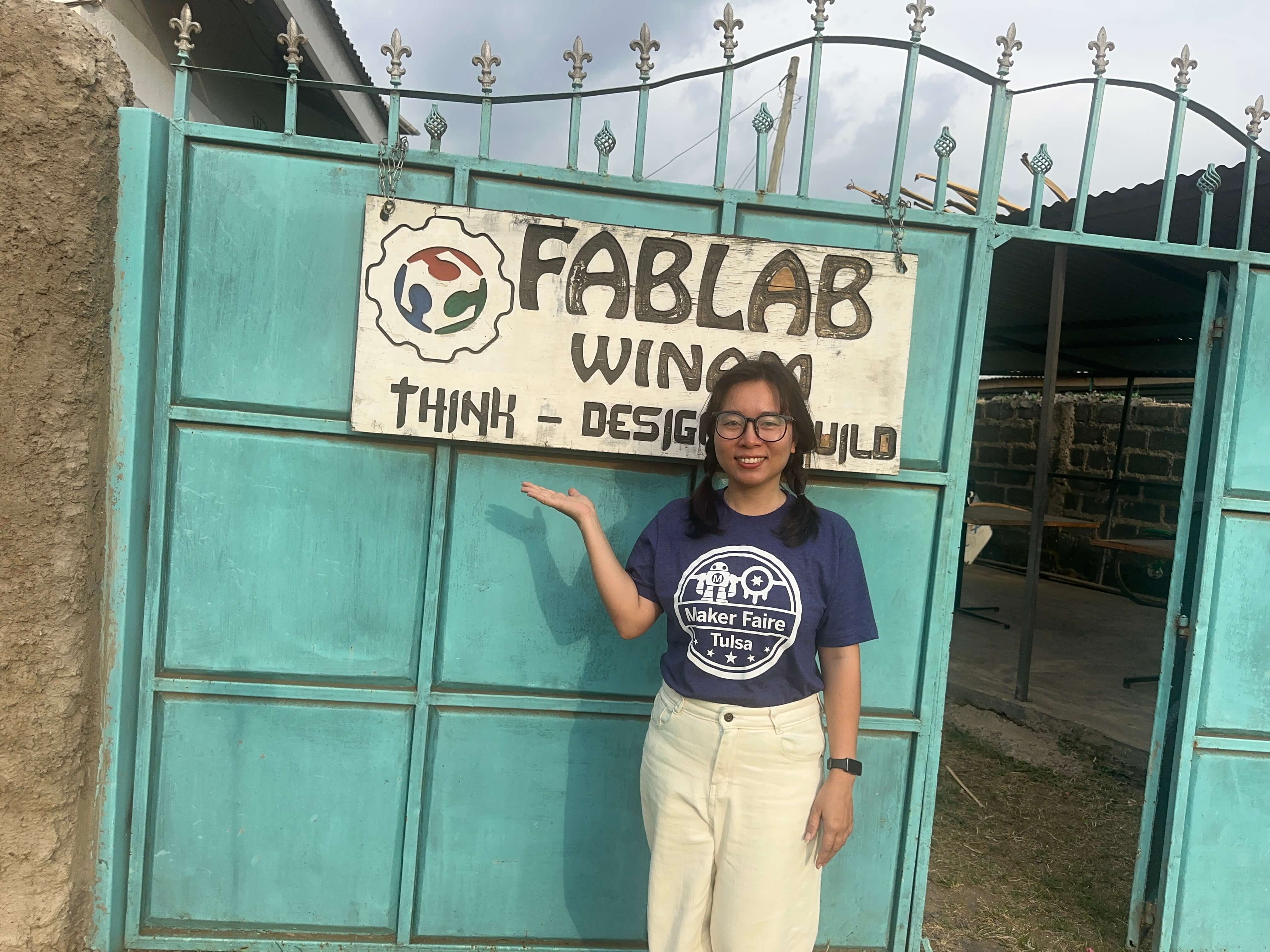
Explore Dao Thi Hong Quyen’s full fellowship reflection to learn more about her journey and the “Fab Phiêu” philosophy (link)